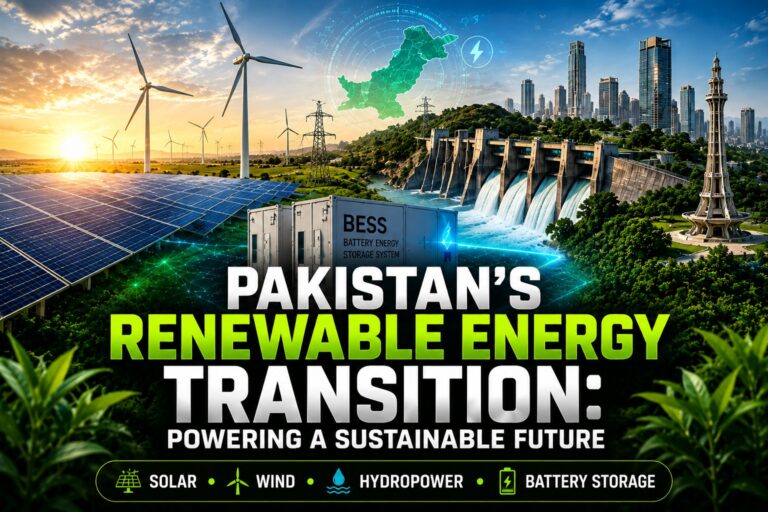
It refers to Pakistan's gradual shift from conventional fossil fuel-based electricity generation toward cleaner energy sources such as solar, wind, hydropower, and biomass.
Renewable energy improves energy security, reduces fuel imports, lowers carbon emissions, creates employment opportunities, and supports sustainable economic development.
Solar energy has enormous potential because much of Pakistan receives high levels of sunshine throughout the year. Wind energy in Sindh also offers significant opportunities.
Major challenges include grid modernization, financing, policy implementation, transmission capacity, technical expertise, and integrating intermittent renewable generation.
Rooftop solar can reduce electricity bills, improve energy independence, and allow consumers to supply excess electricity to the national grid through net metering where applicable.
Yes. Renewable energy supports employment in engineering, manufacturing, installation, maintenance, project management, research, and technical services.
Renewable energy generates electricity with significantly lower greenhouse gas emissions than conventional fossil fuels, helping reduce environmental impacts.