Pakistan has found itself at the centre of one of the Middle East’s most important diplomatic efforts in 2026.
On June 17, the United States and Iran signed the Islamabad Memorandum of Understanding (MoU), with Pakistan serving as a mediator alongside Qatar. The agreement created a framework for ending hostilities and moving the two sides toward further negotiations. Pakistan subsequently continued facilitating technical and high-level discussions between Washington and Tehran.
Now, with the original 60-day period approaching its August 17 deadline, reports on August 12 say the United States and Iran have agreed to extend the ceasefire arrangement. The information has been attributed to Pakistani government sources, making the development particularly significant for Islamabad’s diplomatic standing.
The bigger story, however, is not simply the ceasefire itself. It is the emergence of Pakistan as a bridge between Washington and Tehran at a moment when regional stability, energy markets and maritime trade remain closely connected to the conflict.
Engr Faiz Ullah Khattak successfully completed the first Project Director’s Certification Course jointly conducted by the National Defence University and the Pakistan Engineering Council in 2026 He graduated with Distinction and became part of the inaugural cohort of Chartered Project Directors

Pakistan’s involvement did not begin with the June agreement.
When the conflict escalated earlier in 2026, Islamabad consistently called for restraint and a diplomatic solution. Pakistan also maintained communication with both Washington and Tehran.
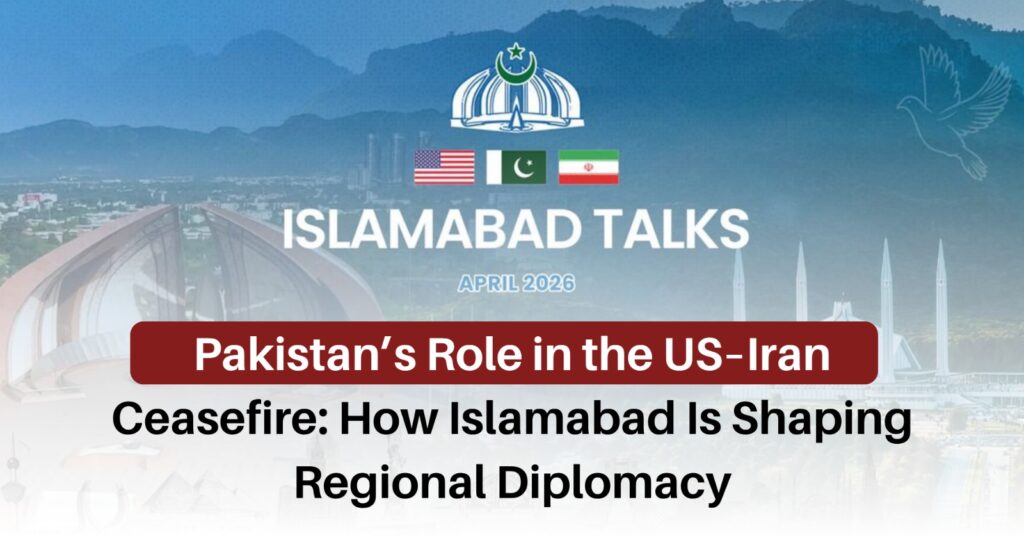
In April, Pakistan hosted talks involving senior American and Iranian delegations. Pakistan’s Foreign Ministry said the discussions involved several rounds of negotiations and that Islamabad would continue facilitating engagement between the two sides.
That earlier diplomatic engagement helped establish Pakistan as a channel through which messages could pass between the two countries.
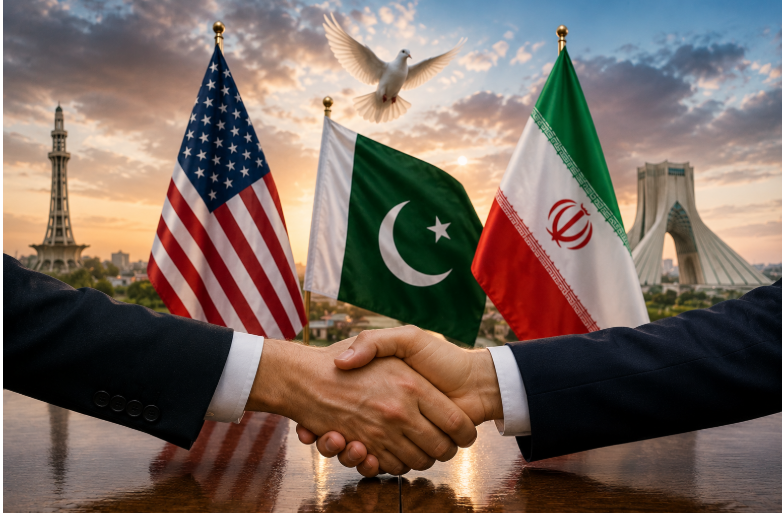
The June Islamabad MoU represented a more formal stage of that process. Pakistan and Qatar were identified as mediators, while the agreement created mechanisms for further technical and political discussions.
For Islamabad, this was an unusual diplomatic position: maintaining relations with the United States while also preserving longstanding ties with neighbouring Iran.
The Islamabad Memorandum of Understanding became the framework for the next stage of US-Iran diplomacy.
According to Pakistan’s official account, the memorandum was signed electronically on June 17 and entered into force immediately. Prime Minister Shehbaz Sharif signed it as mediator, while the presidents of the United States and Iran also signed the document.
The agreement was designed to stop hostilities and create space for negotiations on unresolved issues.
Subsequent talks in Switzerland established a High-Level Committee and working groups dealing with areas including Iran’s nuclear programme, sanctions and monitoring and dispute resolution. The parties also established a communication mechanism intended to reduce incidents and support safe commercial passage through the Strait of Hormuz.
This is important because the agreement is not simply about stopping military action.
It is also an attempt to create a structure through which much harder political issues can eventually be addressed.
The Islamabad Memorandum of Understanding became the framework for the next stage of US-Iran diplomacy.
According to Pakistan’s official account, the memorandum was signed electronically on June 17 and entered into force immediately. Prime Minister Shehbaz Sharif signed it as mediator, while the presidents of the United States and Iran also signed the document.
The agreement was designed to stop hostilities and create space for negotiations on unresolved issues.
Subsequent talks in Switzerland established a High-Level Committee and working groups dealing with areas including Iran’s nuclear programme, sanctions and monitoring and dispute resolution. The parties also established a communication mechanism intended to reduce incidents and support safe commercial passage through the Strait of Hormuz.
This is important because the agreement is not simply about stopping military action.
It is also an attempt to create a structure through which much harder political issues can eventually be addressed.
Pakistan-Russia Agricultural Pakistan-Russia Agricultural Cooperation: Can It Open a New Market? Pakistan
Beyond Independence Day: What Does Marka-e-Haq Mean for Pakistan Today? Marka-e-Haq: What
Pakistan’s Hockey Comeback: Can the Green Shirts Make a Mark at the
Pakistan-Norway Relations: What Does the 2026 Visit Mean? Pakistan-Norway Relations: What Does
Pakistan-Russia Agricultural Cooperation: Can It Open a New Market? How Islamabad Is
Pakistan-Russia Agricultural Cooperation: Can It Open a New Market? Pakistan-Russia Agricultural Cooperation: