Pakistani Hero is a private digital media platform dedicated to showcasing inspiring Pakistani professionals creators and achievers who are making a meaningful impact in their fields We document real journeys highlight genuine contributions and build long term digital recognition for individuals shaping Pakistan’s present and future nationally and globally. Pakistani Hero is a private digital media platform dedicated to showcasing inspiring Pakistani professionals creators and achievers who are making a meaningful impact in their fields We document real journeys highlight genuine contributions and build long term digital recognition for individuals shaping Pakistan’s present and future nationally and globally
Pakistan’s Freelance Economy Is Booming

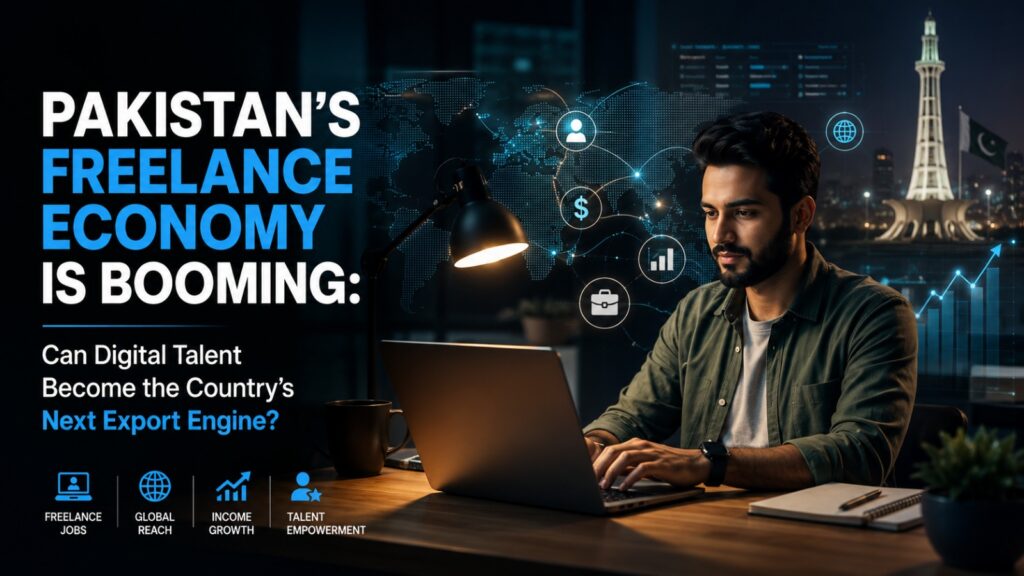
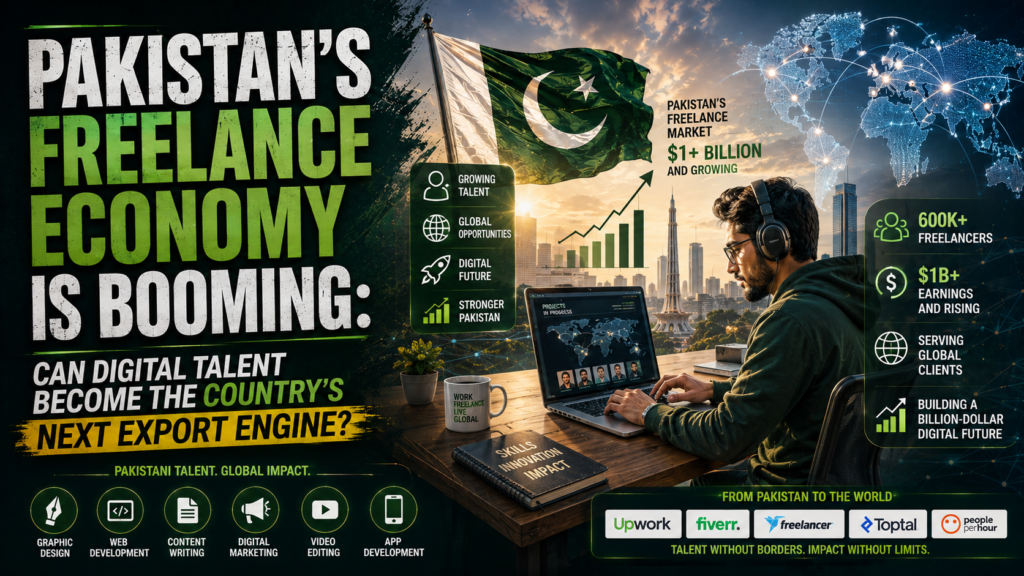
Pakistan’s Freelance Economy Is Booming: Can Digital Talent Become the Country’s Next Export Engine?

Pakistan’s freelance economy is entering a new phase. What was once largely viewed as an alternative source of income for young professionals is increasingly becoming an important part of the country’s export story.

Pakistan’s Freelance Economy 2026: The $2.5 Billion Opportunity

Overview

Pakistan’s freelance economy is entering a new phase. What was once largely viewed as an alternative source of income for young professionals is increasingly becoming an important part of the country’s export story. Pakistani freelancers generated a record $1.76 billion in export earnings during FY2025–26, while freelance export receipts reached $175.439 million in July 2026 alone, registering a 45.5 percent year-on-year increase. 

The latest figures have also sparked bigger expectations for the sector. According to Ibrahim Amin, founder and chairman of the Pakistan Freelancers Association, the country’s freelance export earnings could exceed $2.5 billion during the current fiscal year. Industry estimates also put the number of Pakistani freelancers at more than three million. 

For Pakistan, this is about more than people working from laptops for foreign clients. It represents a shift towards an economy where skills, creativity, software and professional services can generate foreign exchange without the need to physically export a product or send workers abroad.

Pakistan’s Freelancers Just Had a Record Year

The FY2025–26 numbers show just how quickly the sector has expanded. Freelance export earnings rose from $984 million in FY2024–25 to $1.76 billion in FY2025–26, representing an increase of around 78 percent in a single year. Over the past three fiscal years, Pakistani freelancers have generated more than $3.2 billion in foreign exchange, according to official data reported by Business Recorder.

Freelance

Information technology remains the largest contributor, but the growth is no longer restricted to software developers and programmers. The expansion of non-IT freelancing suggests that Pakistan’s digital workforce is becoming increasingly diverse, with professionals working across creative, business and other knowledge-based services for international clients.

July 2026 Shows the Momentum Has Continued

The strong performance in FY2026 has carried into the new financial year. According to State Bank of Pakistan data reported in August, freelance services generated $175.439 million in export receipts in July 2026, compared with $120.556 million in July 2025. That represents an increase of approximately 45.5 percent. 

IT-related freelance earnings accounted for $106.778 million of July’s receipts, while non-IT freelance services generated another $68.661 million. The figures suggest that freelancing is continuing to expand even as Pakistan enters FY2026–27, rather than simply benefiting from a one-year jump in demand. 

Could Pakistan’s Freelance Earnings Cross $2.5 Billion?

The possibility of crossing the $2.5 billion mark is now one of the most interesting developments in Pakistan’s digital economy. The Pakistan Freelancers Association expects export earnings to exceed that figure during the current fiscal year, although it is important to clarify that this is an industry projection rather than an official government forecast. 

Even if the sector does not reach that exact number, the trajectory is significant. Freelance earnings have increased sharply over the past three years, and July’s $175 million in receipts provides an indication of the scale the sector is beginning to reach. If the government can improve the conditions under which freelancers operate, the industry could become an increasingly dependable source of foreign exchange.

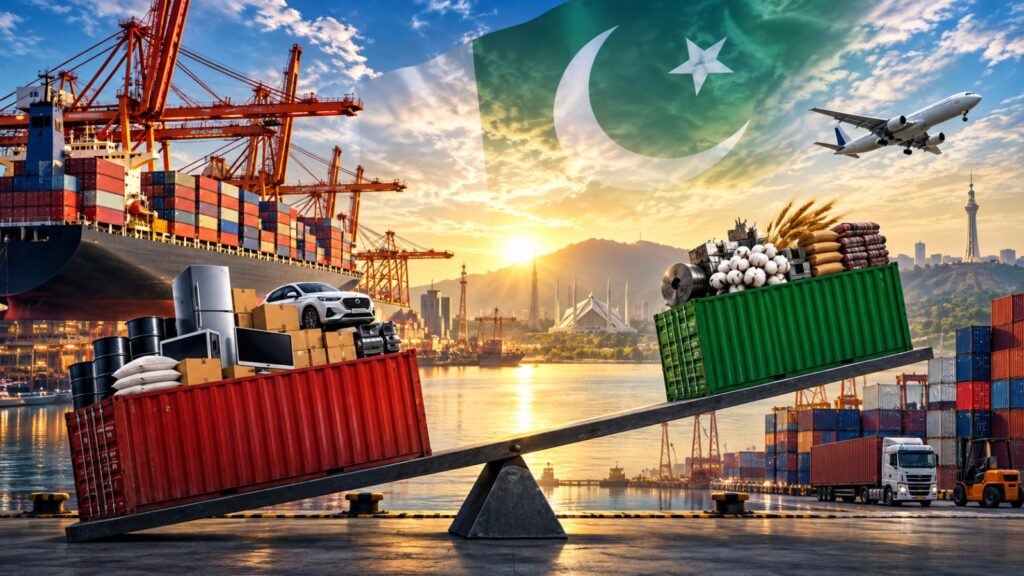
Pakistan Is Exporting Skills, Not Just Products

Traditional exports require factories, raw materials, transportation networks and physical infrastructure. Freelancing works differently. A Pakistani developer in Islamabad can build software for a company in London, while a designer in Lahore can work for a client in Dubai or a video editor in Karachi can deliver projects to a company in New York. The service crosses the border, but the worker does not have to.

That makes freelancing particularly relevant to Pakistan. A large young workforce can participate in international markets while remaining in the country, earning foreign currency and building professional experience at the same time. In this sense, the freelance economy represents a form of digital export that depends more on human capital than on physical production.

IT Is Still the Backbone

Information technology remains at the centre of Pakistan’s freelance economy. IT freelancers generated more than $1.16 billion during FY2025–26, compared with $779 million in the previous fiscal year, according to data reported by Nukta. 

The broader IT sector is also expanding. Pakistan’s ICT export remittances reached approximately $4.6 billion during FY2025–26, up from $3.8 billion the previous year, according to figures presented by the Ministry of IT and Telecommunications. The government has set an ambitious target of increasing total ICT exports to $25.1 billion by 2030.

Freelancing is therefore not developing separately from Pakistan’s technology industry. It is becoming one component of a much larger digital-services economy.

But the Freelance Economy Is Getting Bigger Than Coding

One of the most significant developments is the rapid growth of non-IT freelancing. In FY2026, non-IT freelance earnings reached $592 million, compared with $205 million the previous year. 

This reflects the changing nature of remote work. Graphic designers, content writers, video editors, digital marketers, virtual assistants, consultants, researchers and other professionals can now sell their services directly to international clients. As global companies become more comfortable hiring remote talent, the potential market extends well beyond traditional software development.

Why Are More Pakistanis Turning to Freelancing?

The growth of freelancing is closely connected to the changing global workplace. Companies can now recruit specialised talent from almost anywhere, while online marketplaces and digital payment systems have made it easier for individual professionals to connect with clients overseas.

Pakistan has several characteristics that make it competitive in this market: a large young population, a growing pool of digitally skilled workers and comparatively competitive labour costs. The State Bank has also described freelancing as one of the fastest-growing segments of international trade in services, driven by remote work, digital platforms and global demand for cost-competitive skills. 

The Young Population Could Be Pakistan’s Biggest Advantage

Pakistan’s demographics could become a major advantage if the country succeeds in connecting its young population with global demand for digital services. The State Bank notes that freelancers are predominantly young, with around 60 percent under the age of 30. 

That creates an important opportunity. Instead of relying solely on traditional employment within Pakistan, young professionals can potentially participate in international markets from their own cities. However, demographics alone cannot create an export industry. Young people need relevant skills, reliable infrastructure and access to international clients if the opportunity is to translate into sustained economic growth.

AI Could Change Pakistan’s Freelance Market

Artificial intelligence is likely to become one of the biggest factors shaping the next stage of freelancing. Rather than simply replacing digital workers, AI tools can allow skilled freelancers to complete tasks faster, experiment with new services and handle work that previously required larger teams.

The competitive advantage may therefore increasingly belong to professionals who understand how to combine their existing expertise with AI. A designer who can work with generative tools, a developer who can use AI-assisted coding or a marketer who can analyse large datasets more efficiently may be able to offer more value to international clients.

For Pakistan, this creates both an opportunity and a challenge. The country has a large pool of young workers, but keeping that workforce competitive will require continuous investment in advanced digital and AI skills.

The Government Is Also Changing Its Approach

As freelancing becomes more important to the economy, payment and regulatory systems are becoming increasingly relevant. In 2026, the State Bank of Pakistan revised its instructions to further facilitate IT companies and freelancers in processing export receipts and outward remittances through Exporters’ Special Foreign Currency Accounts. Banks were also advised to establish mechanisms for resolving complaints from IT companies and freelancers in a timely manner. 

These changes address one of the practical difficulties faced by digital exporters: getting paid internationally through a system that is convenient, transparent and reliable. As the industry grows, the ease with which freelancers can receive and retain foreign earnings will become increasingly important.

The Biggest Problem May Be Infrastructure

Freelancing may be digital, but it still depends on physical infrastructure. A freelancer cannot reliably meet international deadlines if the internet repeatedly disconnects or electricity cuts interrupt their work. Large files also require stable and reasonably fast connections, while international clients expect professionals to remain available and responsive.

This makes internet connectivity and electricity reliability part of Pakistan’s export infrastructure. If the country wants to increase digital exports, improvements in broadband access, power reliability and digital payment systems will be just as important as training more people in software or design.

The Internet Is Now Part of Pakistan’s Export Infrastructure

For a traditional exporter, ports, highways and logistics networks determine how efficiently goods reach international markets. For a freelancer, the internet performs a similar function. It is the infrastructure through which work is delivered, clients are contacted and payments are received.

Improving connectivity outside Pakistan’s major cities could therefore have a particularly important impact. If young professionals in smaller cities and rural areas can access reliable internet, training and international payment systems, freelancing could distribute economic opportunities more widely instead of concentrating them in Karachi, Lahore and Islamabad.

The Biggest Challenge: Moving Up the Value Chain

Pakistan cannot build a sustainable digital export industry simply by competing on low labour costs. While affordable services may attract international clients, the long-term advantage will come from developing specialised expertise that allows Pakistani professionals to charge higher rates.

That means the focus needs to shift from simply increasing the number of freelancers to increasing the value of the work they perform. Advanced software development, cybersecurity, AI, data science, financial technology, specialised design and professional consulting can generate considerably more value than basic task-based work.

The Bigger Picture

Pakistan’s freelance economy is becoming an important example of how the country’s relationship with the global economy is changing. Instead of exporting only physical goods or relying on workers to leave the country for foreign employment, Pakistan can increasingly export knowledge, software, creativity and professional expertise from within its own borders.

The record $1.76 billion earned in FY2026, followed by $175.439 million in July 2026, shows that this is no longer a niche activity. With industry representatives now projecting more than $2.5 billion in earnings during the current fiscal year, the sector has the potential to become one of Pakistan’s most important digital export streams. 

What Happens Next?

The next few years will determine whether Pakistan’s freelance economy remains a collection of individual success stories or develops into a larger, organised digital-services industry. The foundations are already visible: millions of freelancers, rapidly increasing export receipts, expanding IT services and growing global demand for remote talent.

The challenge is to build an ecosystem that allows those individuals to scale. If Pakistan can improve digital infrastructure, expand advanced skills training, simplify international payments and encourage successful freelancers to build companies, the impact could extend far beyond freelance income.

Conclusion

Pakistan’s freelance economy has moved far beyond being a side-income opportunity for a relatively small group of internet users. With $1.76 billion in freelance export earnings during FY2025–26 and another $175.439 million generated in July 2026, freelancing is becoming a significant part of Pakistan’s digital export economy. 

The possibility of crossing $2.5 billion in the current fiscal year, as projected by the Pakistan Freelancers Association, shows how much further the sector could grow. But the real opportunity lies beyond the headline number. Pakistan has the chance to turn freelancers into agencies, agencies into technology companies and digital skills into a sustainable source of employment and foreign exchange.

For a country looking to expand its exports while creating opportunities for a young population, that could be one of the most important economic shifts taking place quietly in the background.

Pakistan may not need to export more people to earn foreign exchange. It can increasingly export what its people can do.

About This Story

BE PART OF OUR MISSION

Share Real Stories of Pakistan

Do you know someone who is making Pakistan proud? Nominate them and we will tell their story.

Latest News

Book a meeting