Pakistan arrived in England with a familiar hope: compete in difficult conditions, challenge the hosts and prove that their Test side could stand up against one of the strongest home teams in world cricket.

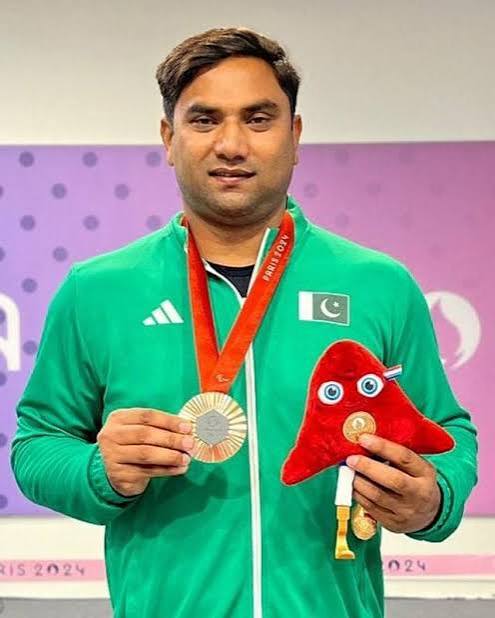
Haider Ali, a well-known para-athlete, won silver at the 2026 Asian Para Games in Nagoya, Japan, giving Pakistan even more cause for celebration. His outstanding achievement in the men’s F37 discus throw on October 21, 2026, has drawn attention to Pakistan’s participation in international para-sports. Ali finished second in a fiercely competitive tournament with an amazing throw of 57.20 meters. Haney of India won bronze with 57.04 meters, while Kudratillokhon Marufkhujaev of Uzbekistan won gold with 57.39 meters. The battle was especially fierce since the margin between gold and silver was only 19 centimeters. This accomplishment is more than just another medal for Pakistan. It adds to the legacy of an athlete who has competed at the top level for almost 20 years and consistently shown he can perform on a global scale. In Pakistani sports, Haider Ali is already a legendary figure. In the men’s F37 discus throw at the 2021 Tokyo 2020 Paralympic Games, he earned Pakistan’s first-ever gold medal. His status as one of the most successful para-athletes in the nation is further strengthened by his most recent silver medal.
For almost 20 years, Haider Ali, a para-athlete from Gujranwala, Punjab, has competed for Pakistan in international sporting events. Throughout his career, he has participated in long jump and sprinting competitions in addition to his specialty of javelin throwing. Haider has participated in many Paralympic Games, including Beijing 2008, London 2012, Rio 2016, Tokyo 2020, and Paris 2024, according to the International Paralympic Committee’s official athlete profile.

These outcomes show how adaptable and long-lasting he is as an athlete. Ali has continued to participate and earn medals in a variety of international tournaments rather than depending on a single successful competition. His most recent performance in the 2026 Asian Para Games opens a new chapter in his illustrious career. On October 21, 2026, the men’s F37 discus throw final was held in Nagoya, Japan. With a powerful effort, Haider Ali won the silver medal with a best distance of 57.20 meters. The Express Tribune reported that Ali’s six efforts measured 51.63 meters, 56.51 meters, 54.98 meters, 53.65 meters, 57.20 meters, and 54.45 meters. His sixth try was crucial to his second-place finish. With just a few centimeters separating the top athletes, the competition remained incredibly tight.
A new Asian Para Games record was set by Marufkhujaev’s winning throw. Both Haney’s 57.04-meter performance and Ali’s 57.20-meter effort were recorded as personal bests. The degree of competition at the event is demonstrated by the 19-centimeter difference between Ali and the gold medalist. Despite this, his performance guaranteed Pakistan a spot on the podium and strengthened his reputation as one of Asia’s top para-athletes. Haider Ali attributed the outcome to his preparation and diligence after the tournament. In an interview with The Express Tribune, he conveyed his appreciation that his efforts had paid off and clarified that he had trained for a year because he saw the tournament as a significant occasion. At the top level of competition, his success shows how regular preparation may result in significant outcomes.
Haider Ali’s silver medal at the 2026 Asian Para Games is a part of a much more extensive athletic career. His international career has included a number of significant turning points that have influenced Pakistan’s para-athletics history.
The third Test began at Edgbaston on September 9 with England winning the toss and choosing to bowl under overcast conditions.
Pakistan entered the match with four changes, while England retained the same XI from Lord’s. The reshaped Pakistan side included new faces, with Saim Ayub returning to the Test team alongside uncapped players.
But the new beginning immediately produced an old problem.
Saim Ayub was dismissed for a duck by Ollie Robinson, who reached the landmark of 100 Test wickets with the dismissal. Robinson has been one of the defining bowlers of the series and has repeatedly exposed Pakistan’s top order with movement and accuracy.
England’s objective is straightforward: complete the clean sweep.
Pakistan’s objective is more complicated.
They need a performance that can change the mood around the team.
Ali announced himself on the international stage at the Beijing 2008 Paralympic Games, where he won silver in the men’s long jump F37/38 event. This achievement was a significant milestone for Pakistan’s para-sport community. It demonstrated that Pakistani athletes could compete successfully against the world’s leading para-athletes. The silver medal also established Ali as an athlete to watch in future international competitions.
For the para-sport community in Pakistan, this accomplishment marked a major turning point. It proved that Pakistani competitors could effectively take on the top para-athletes in the world. Haider’s silver medal also made him a player to keep an eye on in upcoming international championships. Haider Ali placed third in the men’s long jump T37 competition at the Rio 2016 Paralympic Games. His performance demonstrated that his prior success was not a singular accomplishment. Eight years after making his debut, he returned to the Paralympic podium, demonstrating his persistent perseverance and tenacity. Even though he was already successful in the long jump, his career would soon take a significant turn.
The 2021 Tokyo 2020 Paralympic Games were one of the pivotal events of Ali’s career. At the time, Ali set a Paralympic record by winning gold in the men’s F37 discus throw with a personal-best distance of 55.26 meters. Pakistan won their first-ever Paralympic gold medal, according to the Asian Paralympic Committee. The accomplishment was significant for Pakistani sports as well as for Ali. His gold medal victory turned into a pivotal point in Pakistani Paralympic history.
At the 2024 Paralympic Games in Paris, Ali maintained his success on a global scale by winning This outcome further proved that he could compete with both experienced international champions and newer competitors. Sustained training, physical preparation, technical consistency, and the capacity to adjust to shifting competition conditions are all necessary for winning gold at many Paralympic Games. Haider Ali’s results across Beijing, Rio, Tokyo, and Paris reflect the longevity of his career and his contribution to Pakistani athletics.
Ali’s accomplishments at the continental level are enhanced by his silver medal from Nagoya 2026. According to The Express Tribune, he had previously won two bronze and four gold medals in the Asian Para Games prior to this tournament. Another medal is added to that record by his most recent silver. His persistent attendance at important competitions functions as a strong illustration of athletic tenacity and strengthens Pakistan’s standing in Asian para-athletics.
The importance of Haider Ali’s most recent medal extends beyond a single competition’s outcome. It emphasizes the potential of Pakistani athletes with disabilities and the value of providing them with international competition chances.
1) Increasing Pakistan’s Prominence in International Sports Countries have the chance to showcase their ability, discipline, and competitive power through international athletic events. Ali’s silver medal places Pakistan among the medal-winning nations in the men’s F37 discus throw at the Asian Para Games 2026. His record also gives Pakistan a recognizable name in Paralympic athletics, helping draw attention to the country’s participation in disability sports.
2) Challenging Stereotypes About Disability Para-athletes demonstrate that disability does not prevent people from achieving excellence in competitive sport. Ali’s career challenges assumptions about the limitations of athletes with disabilities. His international medals show that sporting ability should be recognized through performance, skill, preparation, and achievement. Greater visibility for athletes like Ali can encourage a more inclusive approach to sports in schools, universities, clubs, and communities.
3) An Inspiration for the Next Generation Young Pakistanis who are interested in sports need to see athletes who have competed internationally and won medals. Ali’s trip serves as one such illustration. His accomplishments demonstrate that even if the road to professional athletics is difficult, chances can be created through persistent dedication. His accomplishments can inspire other young athletes with impairments to pursue competitive sports like para-athletics.
Haider Ali’s silver medal at the Asian Para Games 2026 is another proud moment for Pakistan. His 57.20-meter throw in the men’s F37 discus final secured second place in Nagoya, Japan, following a closely contested competition against Uzbekistan’s Kudratillokhon Marufkhujaev and India’s Haney. The achievement adds to an exceptional international career that includes Paralympic medals at Beijing 2008, Rio 2016, Tokyo 2020, and Paris 2024. His Tokyo gold was particularly historic, giving Pakistan its first-ever Paralympic gold medal. Ali’s journey demonstrates the importance of perseverance, preparation, and continued participation in competitive sport. It also highlights the need for greater investment in para-athletes, inclusive facilities, professional coaching, and financial support. As the country continues to develop its sporting talent, Haider Ali’s achievements stand as an important reminder that excellence deserves recognition and that long-term support can help more athletes reach the international stage. His silver medal in Nagoya is another milestone in a remarkable career and a moment of pride for Pakistan.
A para-athlete from Gujranwala who competes internationally, mainly in discus. He is Pakistan’s first Paralympic gold medallist and has won medals at several Paralympic Games.
Yes. He won silver in the men’s F37 discus throw in Nagoya, Japan, on October 21, 2026.
57.20 metres, on his fifth attempt in the final.
Uzbekistan’s Kudratillokhon Marufkhujaev, with 57.39 m, a new Asian Para Games record.
Winning gold in the F37 discus at the Tokyo 2020 Paralympics (held in 2021), which gave Pakistan its first-ever Paralympic gold.
Silver in long jump (Beijing 2008), bronze in long jump (Rio 2016), gold in discus (Tokyo 2020), and bronze in discus (Paris 2024).
It adds to Pakistan’s record in international para-sport, raises awareness of para-athletics, and strengthens the case for supporting athletes with disabilities.
India’s Haney, with 57.04m.
F37 is a field-sport classification for athletes with certain coordination impairments. Athletes compete under classification rules designed to group eligible competitors according to their impairment and its impact on sporting performance.
Pakistan can support para-athletes through accessible training facilities, professional coaching, sponsorships, financial assistance, international competition opportunities, and more consistent media coverage.