
Join Us
Follow us on social media for daily updates and inspiring stories

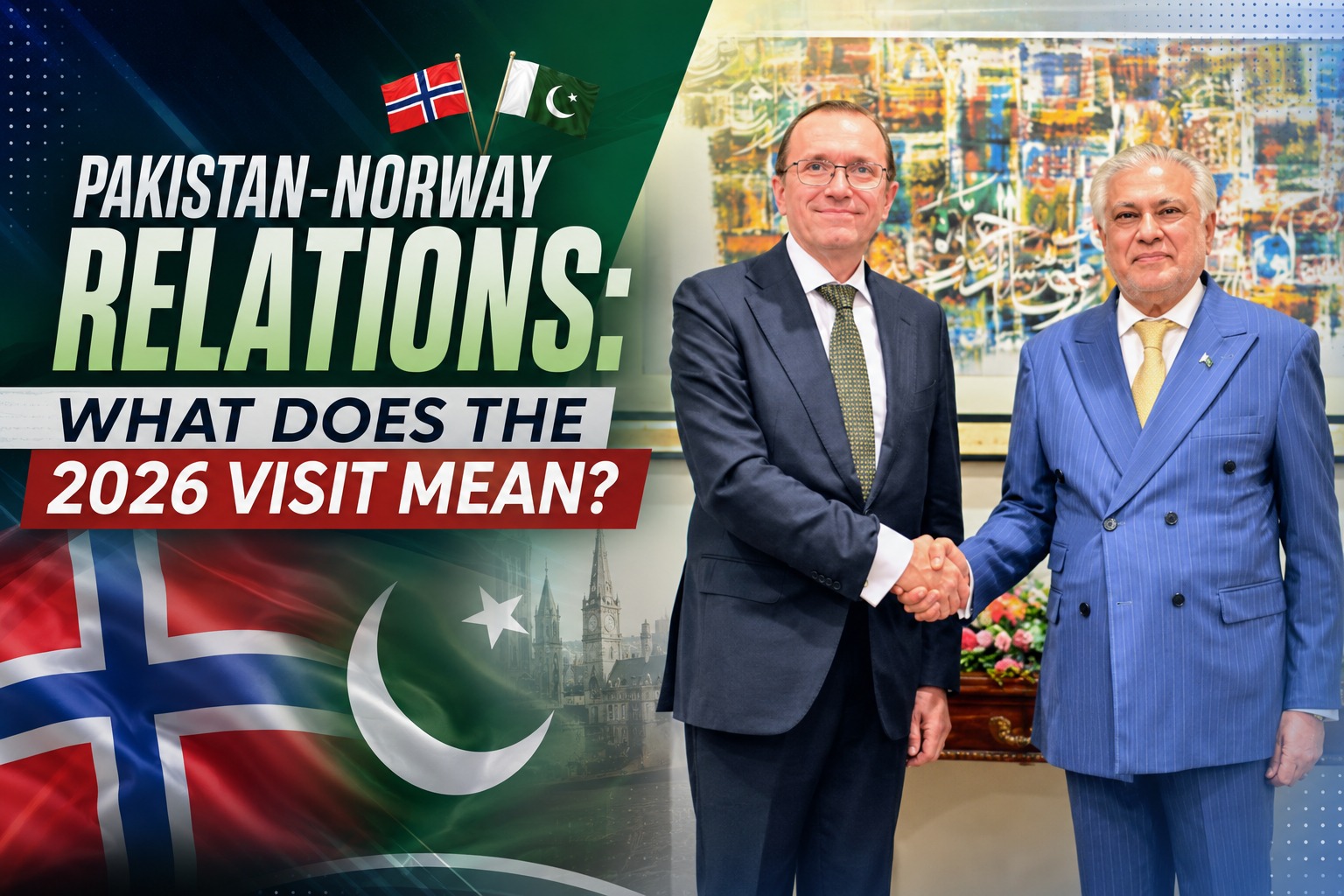
Pakistan and Norway are once again putting their bilateral relationship in the spotlight.
Norwegian Foreign Minister Espen Barth Eide is visiting Pakistan on August 13–14, 2026, at the invitation of Pakistan’s Deputy Prime Minister and Foreign Minister Ishaq Dar. The visit is particularly notable because it is the first visit by a Norwegian foreign minister to Pakistan in around a decade.
The two countries already have decades of diplomatic relations, along with cooperation in trade, development, energy, climate and education. They also share an important people-to-people connection through Pakistan’s community in Norway.
So why does this visit matter now?
For Islamabad and Oslo, the bigger question is whether longstanding goodwill can be turned into stronger trade, investment, technological cooperation and closer diplomatic engagement.
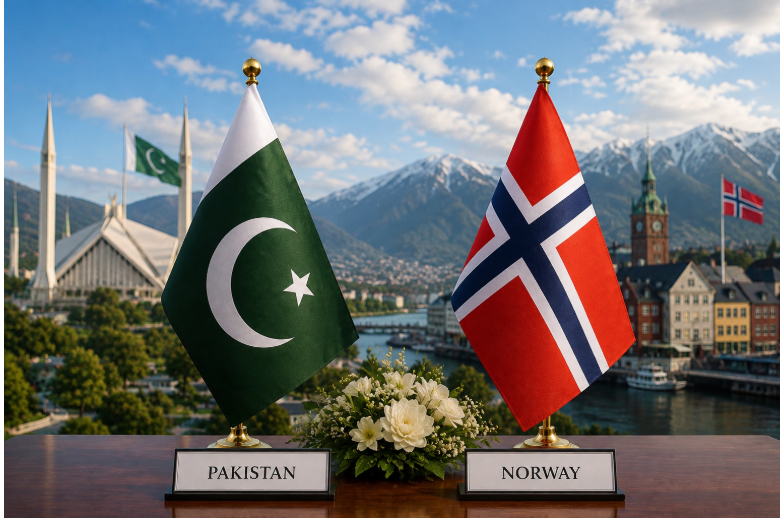
A Norwegian foreign minister does not visit Pakistan every day. That alone makes Eide’s two-day visit noteworthy.
According to Pakistani reports, discussions during the visit are expected to cover bilateral relations, trade, investment, climate cooperation and regional issues.
For Pakistan, it is an opportunity to present its economic and diplomatic priorities directly to a European partner.
For Norway, the visit provides a chance to deepen engagement with a country that sits at an important crossroads in South Asia and maintains close links with the wider region.
The significance of the visit, therefore, goes beyond the meetings themselves. What matters is whether it can create momentum for the next stage of Pakistan-Norway relations.
The relationship between the two countries is not new.
Pakistan and Norway established diplomatic relations on 18 December 1948, shortly after Pakistan became independent. Over the decades, their ties have expanded from traditional diplomacy into development cooperation, trade, education and people-to-people links.
Norway has also recognized the contribution of Pakistanis living in the country. Thousands of Pakistanis have studied, worked and built businesses in Norway, creating connections that go well beyond government institutions.
This gives the relationship an advantage that many newer partnerships do not have.
The foundations are already there. The challenge is turning those foundations into something bigger.
Trade is one of the clearest areas where Pakistan and Norway could do more.
Norway’s official information on bilateral relations lists textiles, leather goods and agricultural products among Pakistan’s exports to Norway. Norwegian products sold to Pakistan include fertilizers, machinery, aluminium, iron and steel.
Despite these links, bilateral trade remains relatively modest.
That leaves plenty of room to expand.
For Pakistani businesses, Norway can offer access to a high-income European market. For Norwegian companies, Pakistan presents a large consumer market and growing demand for technology, energy solutions and industrial expertise.
The next step should be about more than increasing the value of goods exchanged. Building business partnerships, encouraging investment and sharing expertise could give the relationship much greater economic depth.
Climate change is another area where the interests of Pakistan and Norway naturally overlap.
Pakistan is among the countries particularly exposed to climate-related risks, from extreme weather to pressure on water and agricultural systems. Norway, meanwhile, has developed extensive expertise in renewable energy, environmental management and climate adaptation.
Both countries already identify energy, climate adaptation and green shipping as areas of cooperation.
That opens up several possibilities.
Norwegian expertise could support projects involving clean energy, sustainable infrastructure and climate resilience in Pakistan. At the same time, Pakistan offers a large market where such technologies and solutions could be applied on a significant scale.
The opportunity is not simply to import technology.
The more valuable outcome would be partnerships that include training, research, local expertise and long-term investment.
Pakistan’s energy challenge goes beyond producing more electricity.
The country also needs energy that is affordable, reliable and increasingly sustainable.
Norway is particularly relevant in this area because of its experience in hydropower, renewable energy and clean technologies. Its business sector also has expertise in areas such as maritime industries and sustainable solutions.
For Pakistan, cooperation with Norwegian companies and institutions could potentially support renewable-energy projects, technical training and research.
But the strongest partnerships would be those that leave knowledge and skills behind.
If a project brings technology into Pakistan but does little to develop local expertise, its long-term impact may remain limited. Joint ventures, research partnerships and skills development could offer much greater value.
Trade tells only part of the story.
Investment can create jobs, introduce new technology and establish long-term business relationships.
Norway has companies and expertise across sectors including energy, maritime industries, technology, seafood and health sciences. Pakistan, meanwhile, has a large market and growing requirements in energy, infrastructure, technology and industry.
There is a potential meeting point between these two sides.
Renewable energy, digital technology, climate-resilient infrastructure and specialized industrial services are some of the areas where cooperation could be explored further.
Still, investment does not happen simply because two governments have good relations.
Norwegian businesses will look closely at issues such as regulations, taxation, infrastructure and ease of doing business before committing capital.
That makes the policy environment just as important as diplomatic statements.
One of the strongest connections between Pakistan and Norway exists outside government offices.
It is the Pakistani community in Norway.
Norway’s government noted in 2023 that more than 40,000 people living in Norway were either born in Pakistan or had two Pakistani-born parents.
Over the years, Pakistani-Norwegians have established themselves across business, education, professional services and wider Norwegian society.
They also maintain strong connections with Pakistan.
That makes the community a natural bridge between the two countries.
A Pakistani entrepreneur looking for a Norwegian business partner, a student exploring educational opportunities or a researcher looking for an international collaboration may already have access to networks that span both countries.
As bilateral ties grow, these people-to-people connections could become an even more valuable part of the relationship.
Education has been another longstanding link between Pakistan and Norway.
Thousands of Pakistani students have studied in Norway, contributing to academic and professional connections between the two countries.
The next stage could be to expand institutional cooperation.
Norway has considerable research expertise in areas such as climate change, renewable energy and Arctic research. Pakistan, meanwhile, faces practical challenges involving water management, climate resilience, agriculture and energy.
Universities and research institutions from both sides could work together on some of these issues.
Such partnerships can have an impact far beyond individual students. They create professional networks, encourage knowledge sharing and can eventually lead to joint research and innovation.
The visit should not be viewed purely through an economic lens.
Pakistan and Norway also maintain dialogue on regional and international developments.
Norway has previously called for restraint and diplomatic engagement during periods of tension in South Asia, including Pakistan-India tensions.
For Islamabad, maintaining communication with European countries is increasingly important as international politics becomes more complicated.
For Oslo, stronger engagement with Pakistan provides another channel for understanding developments in South Asia.
Neither country is expected to agree on every international issue. What matters is having enough diplomatic space to discuss those differences while finding areas where cooperation is possible.
The relationship is not a one-way opportunity.
For Norway, Pakistan offers access to a large South Asian market with significant demand for energy, technology, infrastructure and sustainable solutions.
Norwegian businesses with expertise in these fields could potentially find opportunities in Pakistan if the commercial environment supports greater investment.
Norway also has an interest in maintaining dialogue with countries that play an important role in South Asian politics.
And then there is the Pakistani-Norwegian community, which provides a ready-made network connecting businesses, professionals, universities and families in both countries.
In other words, there are economic, diplomatic and social reasons for Norway to keep investing in the relationship.
There is plenty of potential, but there are also practical obstacles.
Bilateral trade remains relatively small, and Pakistan and Norway do not have a bilateral free-trade agreement. Norway does, however, provide preferential tariff treatment to Pakistani goods through its GSP arrangement.
For investors, other factors matter too.
Regulatory predictability, taxation, infrastructure and ease of doing business can all influence whether a foreign company decides to enter a market.
This is why the success of the relationship will ultimately depend on implementation.
A ministerial visit can create opportunities and open doors. Businesses, universities and institutions then have to turn those opportunities into actual partnerships.
The meetings during Eide’s August 13–14 visit will be closely watched, but the more important question is what happens afterward.
Will new investment opportunities be identified?
Will businesses from both countries establish stronger partnerships?
Will climate and renewable-energy cooperation move toward specific projects?
Will universities and research institutions develop new collaborations?
These are the kinds of outcomes that could give the visit lasting importance.
For Pakistan, the ideal result would be a relationship that produces tangible opportunities in trade, technology, clean energy, education and investment.
For Norway, deeper engagement could strengthen both its commercial presence and diplomatic connections in South Asia.
The visit should therefore be viewed as a starting point rather than a finished achievement.
Perhaps the most interesting thing about Pakistan-Norway relations is that neither side is starting from zero.
There is already a long diplomatic history, an established Pakistani community in Norway, educational links and cooperation in development and climate-related areas.
What has been missing is greater scale.
Pakistan brings a large market, a young workforce and a strategically important location. Norway brings investment capacity, technological expertise and experience in areas such as renewable energy and sustainability.
If the two countries can connect those strengths through specific projects, the relationship could become considerably more important economically.
The real opportunity is to move from good diplomatic relations to practical partnerships that deliver measurable results.
The visit of Norwegian Foreign Minister Espen Barth Eide to Pakistan marks an important moment in a relationship that has existed for almost eight decades.
Pakistan and Norway already have strong foundations: diplomatic ties, trade, education, development cooperation and a substantial Pakistani community in Norway.
Now there is an opportunity to build on them.
Trade and investment could expand. Renewable energy and climate cooperation could become more significant. Universities and research institutions could develop stronger links. And closer political engagement could give both countries a better understanding of each other’s priorities.
But the success of this visit will not be measured by how many meetings take place or how warmly the two sides speak about their friendship.
It will be measured by what comes next.
If the discussions lead to concrete investments, business partnerships, research initiatives and climate projects, the August 2026 visit could mark the beginning of a more ambitious chapter in Pakistan-Norway relations.