



Join Us
Follow us on social media for daily updates and inspiring stories

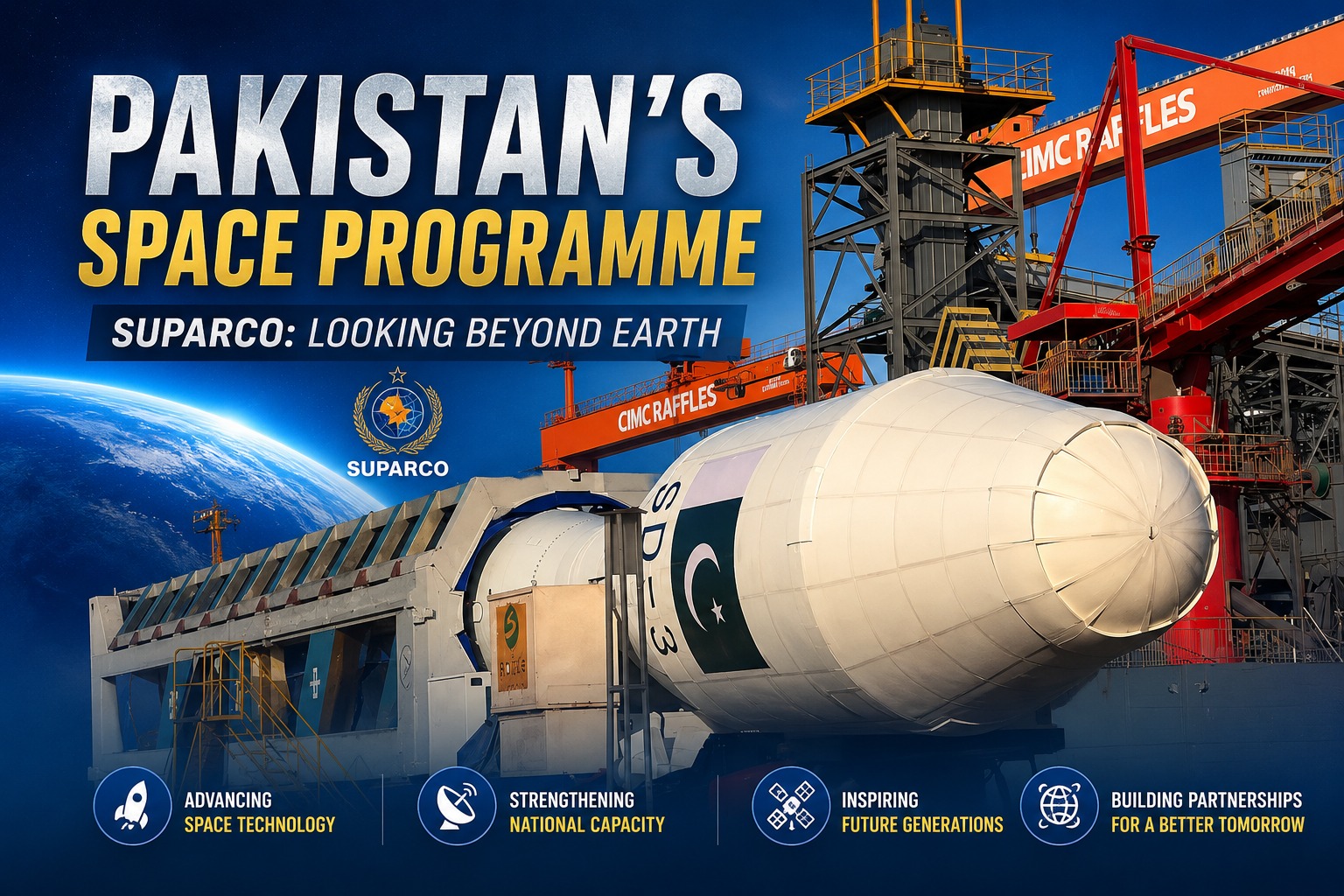
Pakistan’s space programme has steadily evolved from an ambitious scientific initiative into a strategic national asset supporting communication, weather forecasting, disaster management, agriculture, education, and national development. Led by the Space & Upper Atmosphere Research Commission (SUPARCO), Pakistan has launched multiple satellites and continues to strengthen its capabilities in space science and satellite technology.
As countries worldwide invest heavily in space innovation, Pakistan is also working to expand its presence in the global space sector through research, international partnerships, and indigenous technological development. Although the country’s space programme operates on a relatively modest scale compared to major space powers, its progress demonstrates Pakistan’s growing commitment to scientific advancement and technological self-reliance.
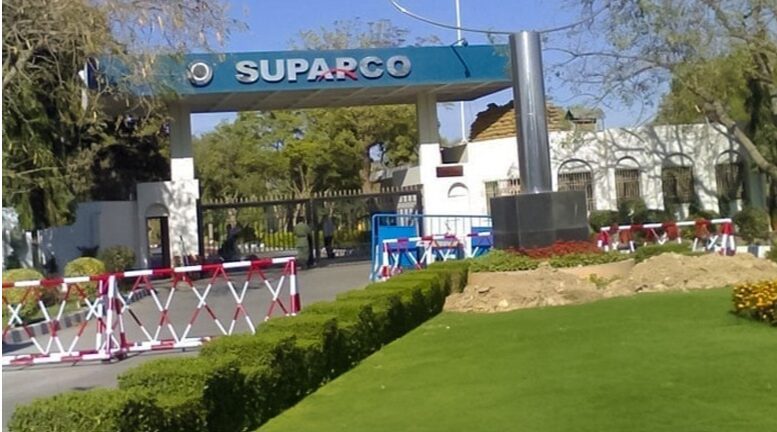
Pakistan became one of the earliest countries in Asia to establish a national space agency.
SUPARCO was founded in 1961 under the leadership of renowned scientist Dr. Abdus Salam, who later became Pakistan’s first Nobel Prize winner in Physics. The organization was established to promote peaceful applications of space science and upper atmospheric research. Over the decades, SUPARCO expanded its focus to include satellite technology, remote sensing, communication systems, and scientific research that supports socioeconomic development.
Pakistan made history in 1962 by launching Rehbar-I, becoming one of the first Asian countries to launch a scientific sounding rocket. This achievement marked the beginning of Pakistan’s journey into space research and laid the foundation for future satellite and aerospace development.
Over the decades, SUPARCO expanded its focus to include satellite technology, remote sensing, communication systems, and scientific research that supports socioeconomic development.
Pakistan’s space programme has achieved several important milestones through satellite launches and Earth observation missions.
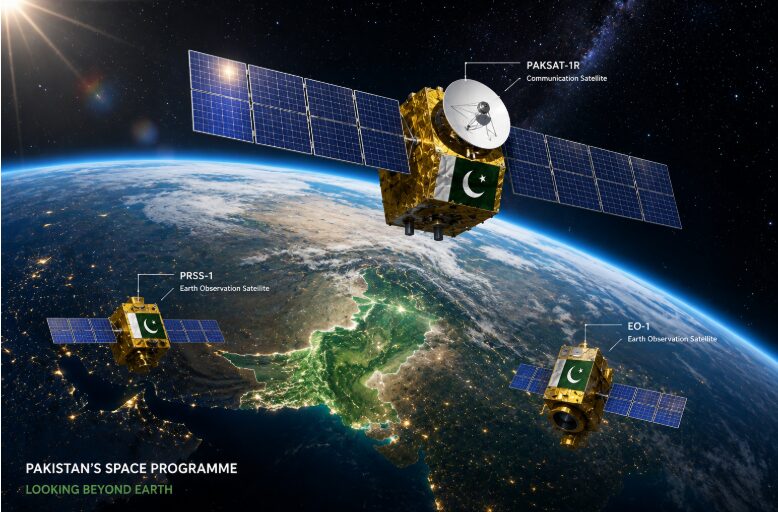
Badr Satellite Series
The Badr satellites represented Pakistan’s early efforts to develop indigenous satellite technology and engineering expertise.
PAKSAT Series
The PAKSAT-1R communication satellite significantly enhanced Pakistan’s telecommunications infrastructure by supporting television broadcasting, internet connectivity, and communication services.
PRSS-1
Launched in 2018, the Pakistan Remote Sensing Satellite-1 (PRSS-1) provides high-resolution Earth observation data that supports agriculture, urban planning, environmental monitoring, disaster management, and infrastructure development.
Electro-Optical Satellite (EO-1)
Pakistan has also deployed Earth observation satellites that strengthen mapping capabilities and improve national resource management.
These satellite systems contribute valuable information for both civilian development and scientific research.
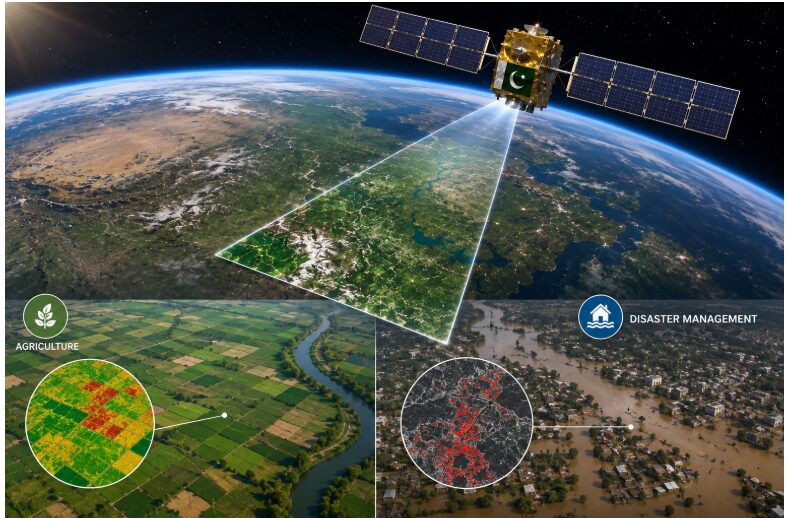
Space technology directly impacts everyday life in ways many people may not realize.
Satellite-based communication improves television broadcasting, internet connectivity, navigation, and telecommunications across the country.
Remote sensing satellites assist government agencies in monitoring crops, water resources, forests, glaciers, and environmental changes. They also support disaster response by providing timely imagery during floods, earthquakes, and other emergencies.
Space research also contributes to education, scientific innovation, and technological capacity building by encouraging research in engineering, robotics, artificial intelligence, and aerospace sciences.
As Pakistan modernizes its digital economy, space technology will become increasingly important for national infrastructure and innovation.
Pakistan continues to expand its space capabilities through international cooperation and domestic technological development.
SUPARCO has collaborated with international partners on satellite launches, technology transfer, and scientific research. Such collaborations have enabled Pakistan to gain valuable expertise while developing indigenous capabilities.
The country’s space roadmap emphasizes strengthening satellite manufacturing, improving remote sensing technologies, expanding communication services, and encouraging greater participation from universities and research institutions.
Pakistan is also increasingly participating in international forums focused on the peaceful use of outer space, space sustainability, and scientific cooperation.
These efforts aim to position Pakistan as a responsible contributor to the global space community.
Despite notable achievements, Pakistan’s space programme faces several challenges.
Limited funding compared to major space powers restricts large-scale research and development projects.
Developing advanced satellite manufacturing capabilities requires sustained investment in laboratories, skilled human resources, and high-tech industries.
Brain drain remains another concern, as many talented engineers and scientists pursue opportunities abroad.
Public awareness about Pakistan’s space achievements is also relatively limited, reducing interest among young students who may otherwise pursue careers in aerospace engineering and space sciences.
Addressing these challenges will require long-term investment, policy continuity, and stronger collaboration between academia, industry, and government.
The future of Pakistan’s space programme appears increasingly promising.
SUPARCO’s long-term vision includes expanding satellite capabilities, strengthening Earth observation systems, improving communication infrastructure, and promoting indigenous technological development.
Global demand for satellite services, climate monitoring, precision agriculture, and geospatial intelligence continues to grow, creating new opportunities for Pakistan’s scientific community.
As international cooperation expands and domestic expertise develops, Pakistan has the potential to play a larger role in regional space science while inspiring a new generation of innovators.
Continued investment in education, research, and technology will determine how successfully Pakistan transforms its space ambitions into long-term national progress.
Pakistan’s space programme represents far more than satellite launches—it reflects the country’s ambition to harness science and technology for sustainable development. From the historic launch of Rehbar-I to modern Earth observation and communication satellites, SUPARCO has laid a strong foundation for future growth.
Although challenges remain, Pakistan’s growing investments in space science, research, and technological innovation offer significant opportunities for economic development, education, environmental management, and national resilience. By nurturing scientific talent and embracing innovation, Pakistan can continue looking beyond Earth while creating meaningful benefits here at home.
The future of Pakistan’s space journey will depend not only on rockets and satellites but also on the vision, knowledge, and determination of its people.