



Join Us
Follow us on social media for daily updates and inspiring stories

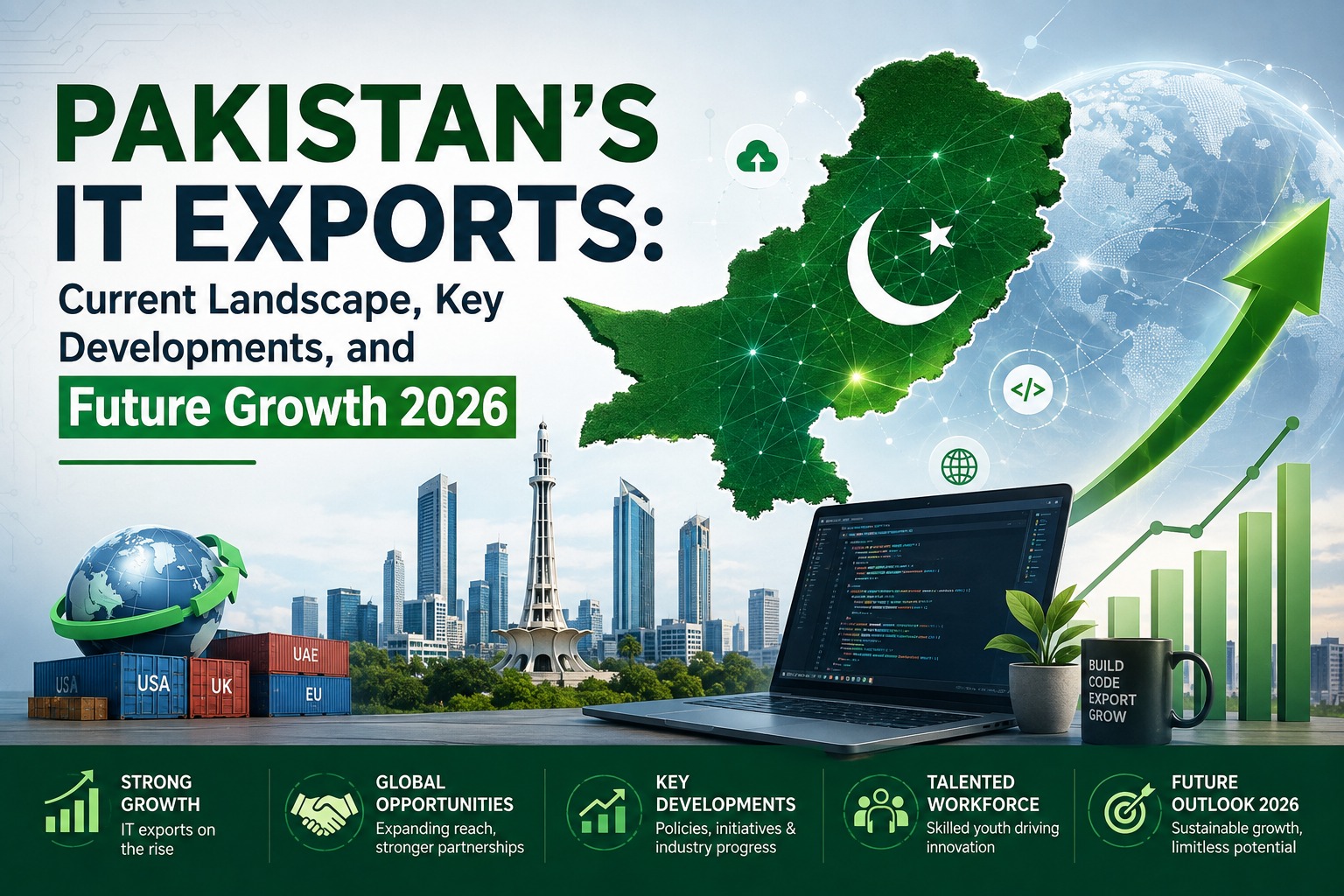
Pakistan’s information technology (IT) sector has emerged as one of the country’s fastest-growing economic pillars, transforming from a niche industry into a globally competitive export sector. Over the past decade, software development, IT-enabled services (ITeS), business process outsourcing (BPO), freelancing, and digital innovation have positioned Pakistan as an increasingly attractive destination for international technology services.
The sector reached a historic milestone in FY2025–26, with IT and IT-enabled services (ITeS) exports climbing to a record US$4.6 billion, representing approximately 20.6% year-on-year growth, according to official government data. This achievement reflects rising global demand for Pakistani technology solutions, the expansion of digital entrepreneurship, and continued investment in the country’s ICT ecosystem.
As Pakistan seeks to diversify its economy and strengthen foreign exchange earnings, the IT industry is playing a critical role in creating high-value employment, attracting foreign investment, and enhancing the country’s global competitiveness. While challenges remain, the sector’s impressive momentum highlights its potential to become one of Pakistan’s most important drivers of long-term economic growth.
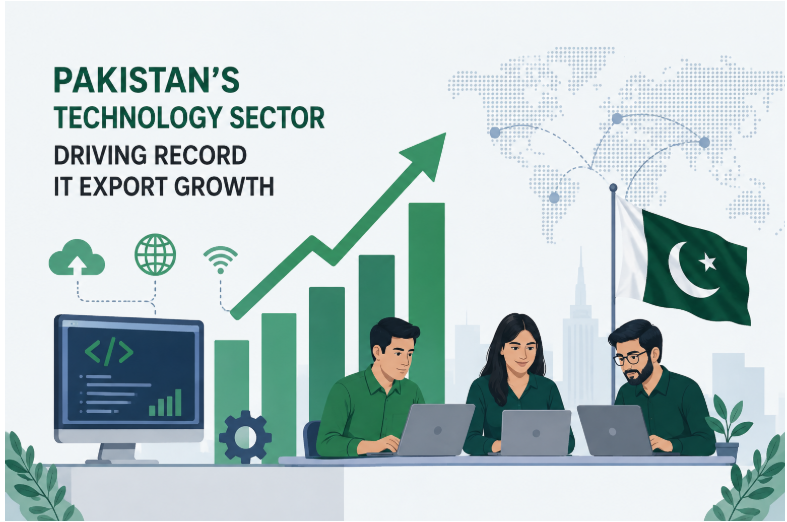
Pakistan’s IT industry has experienced remarkable growth over the past several years, supported by a young workforce, competitive operating costs, and increasing demand for digital services worldwide.
Today, thousands of Pakistani software companies provide services to clients across North America, Europe, the Middle East, and Asia. These firms specialize in software engineering, enterprise solutions, mobile application development, artificial intelligence (AI), cloud computing, cybersecurity, fintech, game development, and business process outsourcing.
Pakistan is also recognized as one of the world’s leading freelancing markets. Skilled professionals offer services ranging from web development and UI/UX design to digital marketing, content creation, and data analytics, contributing significantly to the country’s technology exports.
The government’s continued focus on digital transformation, startup development, and technology infrastructure has further strengthened the industry’s foundation. Technology parks, software houses, innovation centres, and university incubators are helping create an ecosystem that encourages entrepreneurship and innovation.
One of the most significant achievements for Pakistan’s technology sector came during FY2025–26, when IT and IT-enabled services (ITeS) exports reached an all-time high of US$4.6 billion.
One of the most significant achievements for Pakistan’s technology sector came during FY2025–26, when IT and IT-enabled services (ITeS) exports reached an all-time high of US$4.6 billion.
According to official data from the Pakistan Economic Survey 2025–26 and the Ministry of Information Technology & Telecommunication (MoITT), this represented one of the strongest annual performances in the sector’s history.
Several factors contributed to this record growth:
The sector also generated a trade surplus of approximately US$3.9 billion, making information technology one of Pakistan’s strongest-performing export industries within the services sector.
This milestone demonstrates the growing international confidence in Pakistani technology companies and highlights the country’s ability to compete in global digital markets.

Artificial Intelligence (AI) is rapidly transforming Pakistan’s technology landscape and creating new opportunities for innovation and economic growth.
Businesses across industries are integrating AI-powered solutions to automate workflows, improve customer experiences, analyze business data, and enhance productivity. From AI chatbots in customer service to predictive analytics in healthcare and smart learning platforms in education, the adoption of intelligent technologies is steadily increasing.
Beyond AI, emerging technologies such as cloud computing, blockchain, cybersecurity, big data analytics, and the Internet of Things (IoT) are enabling Pakistani companies to compete more effectively in global markets.
The Government of Pakistan has also prioritized AI development through the National Artificial Intelligence Policy, which aims to promote research, innovation, ethical AI adoption, and workforce development. Universities are expanding AI-related degree programmes, while technology incubators continue supporting startups developing AI-based products and services.
As global demand for advanced digital solutions continues to rise, Pakistan’s growing expertise in emerging technologies is expected to further strengthen its IT exports.
Pakistan’s impressive IT export performance is the result of multiple developments occurring simultaneously across the technology ecosystem.
Expansion of Software Exports
Software exports continue to be the largest contributor to Pakistan’s IT industry. Companies across the country are delivering innovative digital solutions to clients in finance, healthcare, education, retail, logistics, manufacturing, and government sectors.
Demand for enterprise software, cloud migration services, cybersecurity solutions, AI-powered applications, and custom software development has increased substantially as organizations worldwide accelerate their digital transformation strategies.
Pakistani software firms have earned recognition for delivering cost-effective, high-quality services while maintaining international quality standards.
Growth of the Startup Ecosystem
Pakistan’s startup ecosystem has matured significantly over the past decade.
Technology startups are introducing innovative products across fintech, healthtech, edtech, agritech, logistics, e-commerce, and artificial intelligence. Incubators, accelerators, venture capital firms, and university innovation centres continue supporting entrepreneurs as they develop scalable businesses.
Although global venture capital investment has become more selective in recent years, Pakistani startups have increasingly shifted their focus toward sustainable business models, profitability, and regional expansion.
This entrepreneurial culture continues to generate employment opportunities while encouraging innovation across multiple industries.
Government Support for the Technology Sector
Government initiatives have played an important role in strengthening Pakistan’s IT ecosystem.
The Ministry of Information Technology & Telecommunication (MoITT), Pakistan Software Export Board (PSEB), and Special Investment Facilitation Council (SIFC) have introduced policies aimed at increasing exports, improving digital infrastructure, attracting foreign investment, and supporting technology companies.
Recent initiatives include:
These initiatives aim to position Pakistan as a regional technology hub capable of competing in the global digital economy.
Digital Skills and Human Capital
Pakistan’s greatest competitive advantage lies in its people.
With one of the youngest populations in the world, the country produces thousands of graduates each year in computer science, software engineering, information technology, and related disciplines.
Government-backed programmes such as DigiSkills.pk, along with university training centres and private technology academies, continue to equip young professionals with globally competitive digital skills.
These programmes focus on software development, freelancing, digital marketing, artificial intelligence, cybersecurity, cloud computing, and data science, areas experiencing strong international demand.
As global businesses increasingly outsource technology services, Pakistan’s skilled workforce is becoming one of the country’s strongest assets in expanding IT exports and strengthening long-term economic growth.
One of the key contributors to Pakistan’s IT export growth is its thriving freelancing industry. Over the past decade, Pakistan has established itself as one of the world’s leading freelance markets, with thousands of professionals offering digital services to clients across North America, Europe, the Middle East, and Asia.
Pakistani freelancers specialize in software development, web and mobile application development, artificial intelligence, graphic design, UI/UX design, cybersecurity, digital marketing, content creation, video editing, and virtual assistance. The flexibility of remote work and access to international marketplaces have enabled skilled professionals to earn foreign exchange while working from within Pakistan.
Government initiatives such as DigiSkills.pk, the country’s largest online digital skills training programme, have played a significant role in preparing young professionals for the global freelance economy. Since its launch, DigiSkills has trained millions of individuals in high-demand digital skills, strengthening Pakistan’s reputation as a global talent hub.
As remote work continues to expand worldwide, freelancing is expected to remain one of Pakistan’s strongest contributors to IT export growth and employment generation.
Despite impressive achievements, Pakistan’s IT sector faces several structural challenges that must be addressed to sustain long-term growth.
Digital Infrastructure
Although broadband connectivity has expanded significantly, internet quality and accessibility remain uneven across different regions of the country. Improving nationwide digital infrastructure will be essential to ensuring inclusive digital growth.
Cybersecurity
As businesses increasingly rely on digital platforms, cybersecurity has become a strategic priority. Strengthening cyber resilience, data protection, and digital trust will be critical to protecting both businesses and consumers.
Skilled Workforce Development
While Pakistan produces thousands of IT graduates annually, rapidly evolving technologies require continuous upskilling. Expanding education in artificial intelligence, cloud computing, cybersecurity, and data science will help ensure the workforce remains globally competitive.
Access to Investment
Technology startups and scaling companies often face challenges in securing long-term investment and expanding into international markets. Strengthening venture capital ecosystems and encouraging foreign direct investment (FDI) can accelerate innovation and business growth.
Addressing these challenges will require coordinated efforts between government, academia, industry, and the private sector.
Pakistan’s IT industry is no longer simply another export sector,it has become a strategic pillar of the country’s future economy.
Unlike many traditional industries, technology exports require relatively lower physical infrastructure while generating high-value employment and foreign exchange earnings. Every successful software company, startup, or freelance professional contributes not only to export revenues but also to the development of local innovation ecosystems.
Pakistan possesses several competitive advantages, including a young population, an expanding pool of technology professionals, competitive service costs, and increasing global recognition for software quality. These strengths position the country to become a preferred destination for digital services and technology outsourcing.
However, maintaining this momentum will depend on consistent policy implementation, continued investment in research and development, stronger university-industry collaboration, and the commercialization of emerging technologies. Encouraging innovation, protecting intellectual property, and improving ease of doing business will also play an important role in attracting international investors and multinational technology companies.
If these priorities remain at the forefront of national development strategies, Pakistan’s IT industry can evolve from an emerging exporter into a globally recognized technology hub.
The outlook for Pakistan’s IT sector remains highly promising.
Global demand for software development, artificial intelligence, cybersecurity, fintech, cloud computing, and digital transformation services continues to expand. Pakistan is well-positioned to capitalize on these opportunities through its skilled workforce, competitive business environment, and growing technology ecosystem.
Government initiatives to expand Software Technology Parks, strengthen digital infrastructure, enhance technology education, and promote investment are expected to further accelerate sectoral growth. The increasing adoption of AI, digital payments, and e-commerce will also create new opportunities for businesses and entrepreneurs.
As Pakistan continues diversifying its economy, the technology sector is likely to become one of the country’s largest sources of export revenue, high-value employment, and innovation-driven economic growth.
Pakistan’s record-breaking IT export performance in 2026 reflects far more than impressive financial figures, it demonstrates the country’s growing ability to compete in the global digital economy. Driven by a talented workforce, expanding software industry, thriving freelancing ecosystem, supportive government initiatives, and increasing adoption of emerging technologies, the IT sector has become one of Pakistan’s greatest economic success stories.
While challenges such as infrastructure, cybersecurity, digital skills, and investment remain, the sector’s long-term prospects are exceptionally strong. Continued collaboration between government, academia, private industry, and entrepreneurs will be essential to sustaining this momentum.
With strategic investments in innovation, artificial intelligence, digital infrastructure, and human capital, Pakistan has the potential to establish itself as one of Asia’s leading technology exporters. The country’s digital transformation is not merely shaping the future of its economy,it is creating new opportunities for millions of Pakistanis and strengthening its position in the global technology landscape.