For years, Pakistan’s economic relationship with the outside world has been closely associated with China, the Gulf and international institutions such as the IMF. That picture may now be changing. Islamabad is actively trying to strengthen its economic engagement with Washington, including a request for a proposed $10 billion US exchange stabilisation facility as it prepares to return to international capital markets. The development comes alongside renewed Pakistan-US discussions on trade, investment, energy, infrastructure and access to American financial institutions.
The move is particularly interesting because it is not simply about obtaining another source of financing. Pakistan’s finance minister, Muhammad Aurangzeb, has described the proposed US facility as a signal of confidence in the country’s currency and economic stability rather than a conventional loan. If approved, the facility could help Islamabad reassure international investors as it seeks to raise funds from global capital markets.
At the same time, Pakistan is not abandoning China. Beijing remains a major economic partner, creditor and investor. What appears to be emerging instead is an attempt to diversify Pakistan’s external economic relationships and reduce dependence on any single source of financing. The bigger question is whether this represents a genuine economic recalibration or simply another attempt by Islamabad to secure financial breathing room.
Pakistan’s renewed economic engagement with the United States comes at a time when Islamabad is trying to move away from repeated cycles of financial crisis and emergency financing. The country has made progress under its current $7 billion IMF programme, including improvements in fiscal management and inflation, but economic growth remains relatively modest and the government still faces significant financing requirements.

The government is therefore looking beyond traditional bilateral loans. Finance Minister Muhammad Aurangzeb has held discussions with US institutions including the US Treasury, the International Development Finance Corporation and the Export-Import Bank, while Pakistan has also been negotiating a reciprocal trade framework with Washington. Islamabad has presented these discussions as part of a broader effort to attract investment, improve market access and support export-led growth.
This is why the word “pivot” is useful, although it needs to be used carefully. Pakistan is not suddenly turning away from China and moving entirely towards the United States. Instead, it appears to be trying to create more room for manoeuvre by strengthening economic ties with Washington while maintaining its existing relationships with Beijing and other partners.
At first glance, a $10 billion facility might appear to be simply another financial lifeline. Its significance, however, could be much greater if it is viewed by international investors as a sign that Pakistan has access to additional external support.
Financial markets pay close attention to a country’s ability to meet its external obligations. A credible backstop can potentially reduce concerns about currency instability and repayment risks, making investors more comfortable with buying Pakistani bonds or providing financing. This is precisely why the finance minister has described the proposed facility as a signal rather than simply a source of cash.
There is still a major caveat: the facility has not yet been approved. Until Washington formally agrees to the arrangement and its terms become clear, it should be treated as a proposal rather than guaranteed funding.
Another major part of the story is Pakistan’s attempt to return to international capital markets. The country has been preparing for new bond issuances as its economic conditions improve, while ratings agencies have shown some improvement in their assessment of Pakistan’s outlook. The government is also considering different instruments, including Eurobonds, Sukuk and renminbi-denominated bonds.
This is important because borrowing directly from international investors is different from relying primarily on bilateral loans. If Pakistan can regularly access capital markets on reasonable terms, it would have more flexibility in managing its external financing requirements.
But markets will not simply respond to political announcements. Investors will look at Pakistan’s reserves, fiscal position, debt repayments, inflation, growth prospects and reform record. A US facility could improve confidence, but it cannot replace the underlying economic reforms needed to maintain that confidence.
This is perhaps the most politically sensitive part of the story.
China remains Pakistan’s largest bilateral creditor and one of its most important economic partners. The China-Pakistan Economic Corridor has brought major investment in energy, infrastructure and transport, while Chinese institutions have provided significant financial support over the years.
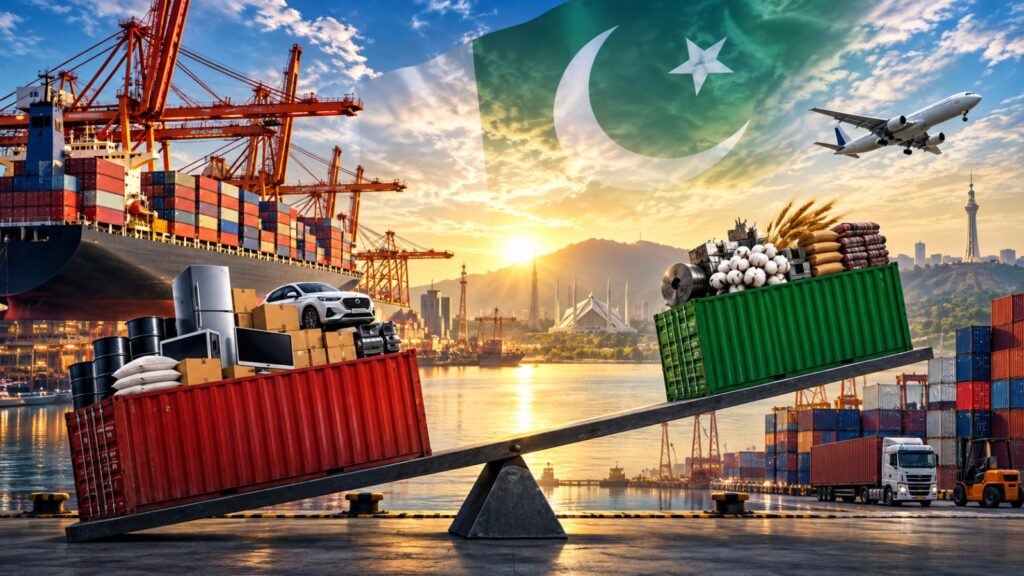
However, Pakistan is also facing concerns about its persistent trade deficit with China. A parliamentary committee recently called for a comprehensive assessment of Pakistan’s trade imbalance with China and other free-trade partners, highlighting the challenge of ensuring that economic partnerships generate stronger export opportunities for Pakistan as well.
The current US push should therefore not automatically be interpreted as Pakistan abandoning Beijing. A more accurate interpretation is that Islamabad is attempting to diversify its economic relationships. For a country that has repeatedly faced external financing pressures, having multiple sources of investment, trade and financial support can provide greater flexibility.
The relationship is not entirely one-sided. The United States also has economic and strategic interests in Pakistan.
Pakistan offers a large consumer market, a young workforce and opportunities in sectors including energy, infrastructure, telecommunications, logistics and digital technology. Pakistani officials have specifically highlighted these areas during discussions with US representatives.
Washington also has an interest in maintaining a functioning relationship with Islamabad at a time of significant geopolitical instability across South Asia and the Middle East. Pakistan’s role in regional diplomacy, particularly its recent engagement between Washington and Tehran, has given Islamabad additional diplomatic relevance.
That does not mean geopolitical cooperation automatically translates into economic investment. American companies will still consider profitability, political risk, regulations and market conditions before committing capital. But stronger government-to-government relations can make those commercial conversations easier.
While the proposed $10 billion facility has received most of the attention, Pakistan’s longer-term economic interests may actually depend more on trade.
Pakistan and the United States have been negotiating a reciprocal trade framework aimed at increasing bilateral trade and diversifying Pakistani exports to the American market. Pakistan’s Foreign Office has said significant progress has been made in these discussions, although negotiations are continuing.
The United States is already one of Pakistan’s most important export markets. Greater access could help Pakistani businesses in sectors such as textiles, information technology, sports goods, surgical instruments, agriculture and other manufactured products.
For Pakistan, expanding exports is ultimately more sustainable than continuously seeking external financing. Loans can help manage short-term pressure, but export earnings generate the foreign exchange needed to support the economy over the long term.
Islamabad is also attempting to attract US investment into commercially viable projects. During recent discussions, Pakistani officials highlighted opportunities in energy, ports, logistics, telecommunications, digital technology and artificial intelligence.
This is significant because Pakistan needs investment that creates productive capacity rather than simply helping it manage existing debt. Investment in energy infrastructure, technology, logistics and export-oriented industries could potentially increase productivity and create new sources of foreign exchange.
The challenge is convincing American companies that Pakistan is a predictable place to invest. Businesses typically look for regulatory stability, reliable infrastructure, transparent taxation, access to foreign exchange and a clear legal framework. Economic diplomacy can open doors, but domestic policy ultimately determines whether investors walk through them.
Even with stronger US engagement, the IMF remains central to Pakistan’s economic strategy.
Pakistan is currently operating under a $7 billion IMF programme, and the government has highlighted progress under the programme, including improvements in fiscal management and structural reforms. Pakistan’s Foreign Office has also pointed to the successful completion of multiple IMF reviews and positive movement from international credit-rating agencies.
This means the US relationship should not be viewed as an alternative to the IMF. In fact, Washington’s willingness to engage economically is partly connected to its assessment of Pakistan’s reform trajectory and efforts to return to international markets. US Treasury Secretary Scott Bessent has welcomed Pakistan’s reform efforts and its push to regain access to global capital markets.
The IMF, the US and international investors are therefore connected pieces of the same economic picture.
The proposed US facility is particularly relevant to the Pakistani rupee because exchange-rate stability is one of its stated purposes.
Pakistan has historically faced pressure on its foreign-exchange reserves when its import bill rises or external debt repayments become due. A stronger reserve position can help reduce the risk of sudden currency pressure, while investor confidence can influence how much foreign capital enters the country.
However, a financial backstop does not automatically guarantee a permanently stable rupee. The currency ultimately depends on the broader balance between exports, imports, remittances, investment, reserves, inflation and fiscal policy. If structural imbalances remain, external support can only provide temporary protection.
Potentially, but the answer depends on where US investment actually goes.
If American companies increase investment in Pakistan’s technology, energy, logistics and manufacturing sectors, that could create direct and indirect employment. Greater access to the US market could also benefit Pakistani exporters and small businesses, while investment in digital industries could generate opportunities for software developers, engineers, data specialists and other skilled workers.
But it would be misleading to suggest that the proposed $10 billion facility itself will create a specific number of jobs. The facility is primarily designed as financial support and a confidence mechanism, not a dedicated employment programme.
The more meaningful employment gains would come if improved financial stability and stronger trade relationships encourage companies to invest in productive sectors.
For young Pakistanis, the most important potential benefit is not necessarily another foreign loan. It is the possibility of a more export-oriented economy in which businesses can sell products and services internationally.
Pakistan has a large young workforce, and its technology and freelance sectors have already demonstrated the ability to connect with global customers. If stronger US ties lead to greater investment in technology, AI, digital services and education, young professionals could gain access to new opportunities without necessarily leaving the country.
This is particularly relevant as Pakistan simultaneously deepens its relationship with global technology companies such as Google and seeks greater access to US markets. The combination of skills, technology and international market access could become more important than traditional financial assistance.
Pakistan’s economic outreach to Washington cannot be separated from geopolitics.
Islamabad has recently become more diplomatically significant because of its engagement with both Washington and Tehran. Pakistan is attempting to maintain communication with the United States while also preserving its relationship with neighbouring Iran. At the same time, its strategic relationship with China remains central to its foreign policy.
This gives Pakistan an opportunity, but it also creates a delicate balancing act. Islamabad must avoid creating the impression that it is choosing one major power at the expense of another. A diversified economic strategy can actually strengthen Pakistan’s strategic autonomy if it allows the country to work with multiple partners rather than becoming excessively dependent on one.
That may be the deeper logic behind the current economic outreach.
Reducing dependence is easier to say than to achieve.
China remains deeply integrated into Pakistan’s infrastructure, energy and financing landscape. CPEC projects, Chinese lending and bilateral trade are not relationships that can simply be replaced by American financing.
What Pakistan can do is diversify. More US investment, stronger exports to American markets, greater engagement with Gulf economies, continued cooperation with China and improved access to European markets could collectively reduce the risks associated with relying too heavily on any single partner.
Economic diversification, rather than geopolitical realignment, may therefore be the more accurate description of what Islamabad is attempting.
The immediate focus will be on whether Washington approves Pakistan’s proposed $10 billion exchange stabilisation facility. Pakistan expects a decision from the US Treasury by the end of September, according to Finance Minister Muhammad Aurangzeb.
Beyond that, the progress of the Pakistan-US reciprocal trade framework will be important, as will any concrete investment commitments from American companies and institutions. The government’s ability to maintain IMF reforms and continue improving its credit profile will also determine how international markets respond when Pakistan seeks new financing.
The biggest test, however, will be whether Pakistan can convert improved diplomatic relations into trade, investment and export growth rather than simply another cycle of external financial support.
Pakistan’s renewed economic outreach to Washington is one of the more interesting developments in the country’s economic and foreign-policy landscape. The proposed $10 billion US facility, negotiations over greater trade access and discussions with American financial institutions all point towards a more active effort by Islamabad to diversify its external economic relationships.
But calling this a complete shift away from China would be misleading. China remains an important economic partner, while the IMF continues to play a central role in Pakistan’s financial stabilisation. What Islamabad appears to be pursuing is something more pragmatic: more options, more markets and more sources of investment.
For Pakistan, that could ultimately be more valuable than choosing between Washington and Beijing.The real economic pivot is not from China to America.It is from dependence to diversification.