

Join Us
Follow us on social media for daily updates and inspiring stories

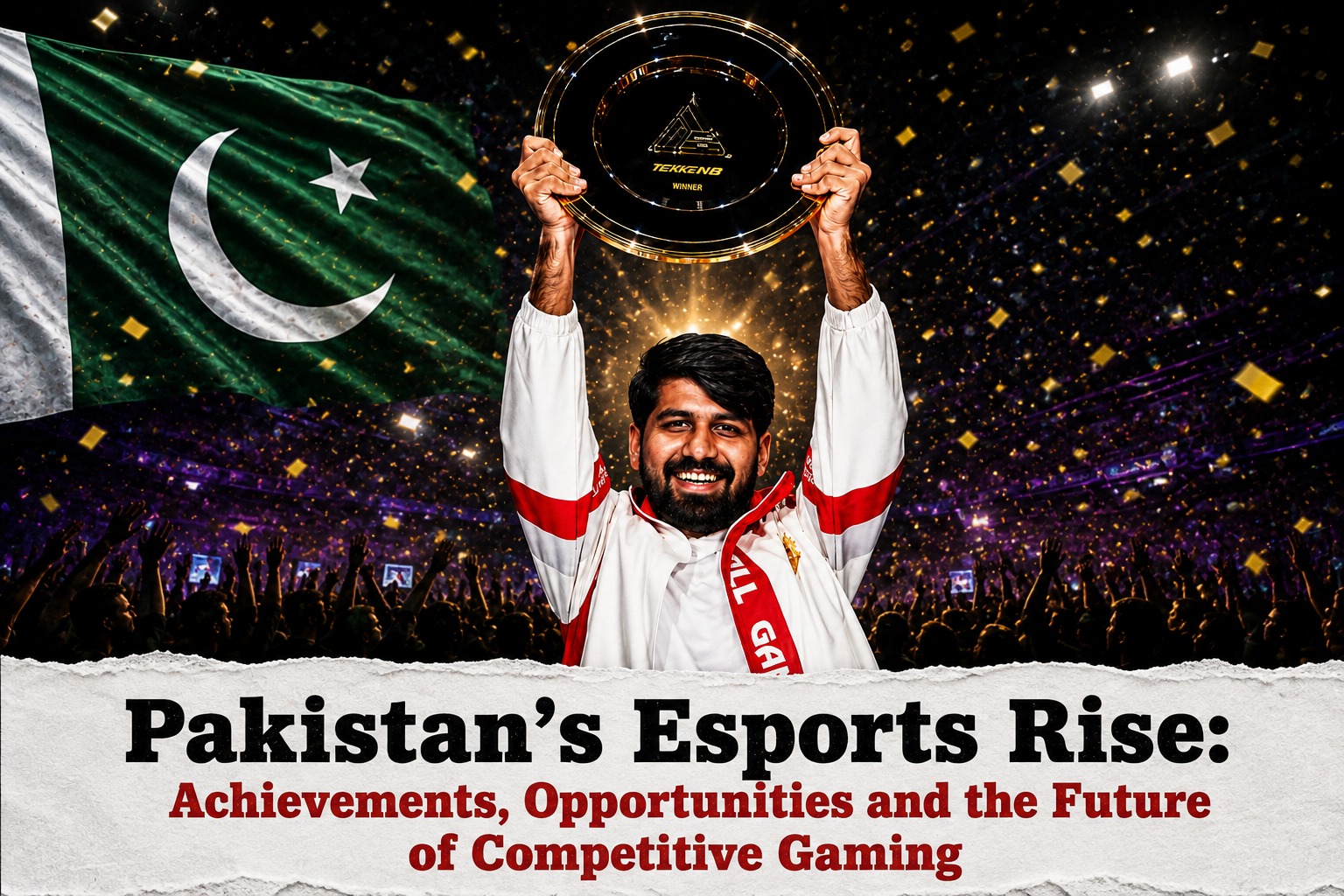
Pakistan’s gaming scene has received a major international spotlight after Pakistani player Muhammad Zubair won the Tekken 8 championship at the 2026 Esports World Cup in Paris.
Zubair defeated South Korea’s LowHigh 5–0 in the grand final, securing the championship and a reported $250,000 prize. His victory is another major achievement for Pakistan’s competitive gaming community and adds to the country’s growing reputation in fighting games.
But Zubair’s success represents more than one tournament victory. It raises a larger question: Can esports become a serious career opportunity for young Pakistanis?
With millions of young people using digital platforms, growing access to gaming technology, and government-backed initiatives supporting gaming and animation skills, Pakistan’s esports ecosystem is beginning to move beyond entertainment and toward a potential digital career industry.
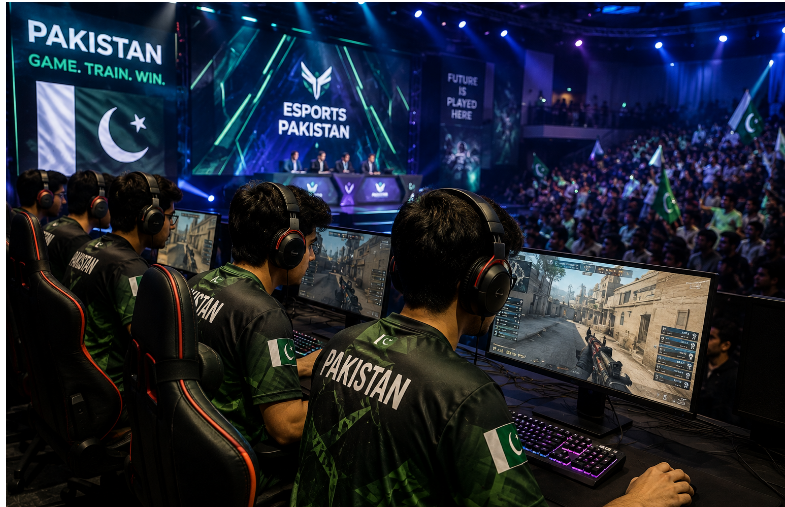
The latest chapter in Pakistan’s esports story belongs to Muhammad Zubair.
At the 2026 Esports World Cup in Paris, Zubair produced a remarkable run to win the Tekken 8 championship. After surviving the earlier stages, he defeated fellow Pakistani star Arslan “Ash” Siddique in the tournament before reaching the grand final.
The final against South Korea’s LowHigh was decisive. Zubair won the series 5–0, completing a dominant performance on one of the biggest international esports stages
His victory earned him $250,000, according to reporting from Dawn.
The achievement is particularly significant because it places another Pakistani player at the centre of global competitive gaming. It also demonstrates that Pakistani players can compete against established international professionals when given access to high-level tournaments and opportunities.
Zubair’s achievement did not happen in isolation.
Pakistan has already developed an international reputation in Tekken, largely through players such as Arslan Ash. The country’s fighting-game community has produced competitors capable of defeating some of the world’s most established players.
The 2026 Esports World Cup further highlighted this depth. Zubair defeated Arslan during his run, while Arslan himself remained among the tournament’s leading competitors and eventually finished fourth.
This suggests that Pakistan’s strength is not limited to a single player.
A growing competitive community, local tournaments and experienced players have created an environment where new talent can emerge.
The development is important because successful esports ecosystems usually require more than one champion. They need players, coaches, organizers, sponsors, content creators, tournament platforms and audiences.
Pakistan is gradually building several of these layers.
Several factors are contributing to the development of Pakistan esports.
The first is accessibility. Gaming no longer requires a traditional gaming console or expensive computer in every case. Smartphones and affordable internet access have made competitive and online gaming accessible to a much larger population.
The second is community.
Local gaming tournaments and online communities allow players to compete, practise and build networks. These communities can identify talented players who may eventually participate in international competitions.
The third is digital connectivity.
Pakistan’s Ministry of IT and Telecommunication currently reports more than 155 million broadband subscribers and more than 2.3 million freelancers, reflecting the country’s expanding digital ecosystem.
While broadband access does not automatically create esports professionals, stronger digital connectivity provides the infrastructure through which gaming communities, livestreaming and digital careers can develop.
For years, gaming in Pakistan was often viewed primarily as a form of entertainment.
That perception is changing.
The broader gaming industry includes game development, animation, esports, livestreaming, content creation, event management, game testing, graphic design, marketing and technology services.
Pakistan’s Ministry of IT and Telecommunication has supported initiatives aimed at developing the country’s gaming and animation capabilities.
One major example is the Center of Excellence in Gaming and Animation (CEGA) at NED University, established through collaboration involving the Ministry of IT and Ignite National Technology Fund. The initiative was designed to provide training, facilities and industry opportunities for young Pakistanis interested in gaming and animation.
This distinction matters.
A person does not necessarily have to become a professional esports player to build a career around gaming.
The industry creates opportunities across a much wider digital ecosystem.
Professional gaming is only one possible career path.
Young Pakistanis interested in esports can potentially explore several fields, including:
This broader ecosystem makes esports particularly relevant to Pakistan’s young digital workforce.
The government’s CEGA initiative has specifically focused on developing gaming and animation skills, while Pakistan’s wider technology ecosystem continues to expand.
For Pakistani youth, the opportunity therefore extends beyond winning tournaments. The larger possibility is participation in a global digital entertainment industry.
Esports is also becoming a business ecosystem.
Major international tournaments attract sponsorships, broadcasting partnerships, advertising, merchandise, ticket sales and digital audiences.
The Esports World Cup describes its 2026 competition as a seven-week global event featuring 24 game titles, bringing together players, clubs and creators.
That scale demonstrates why esports has developed into a professional industry rather than simply a collection of gaming competitions.
For Pakistan, this creates opportunities for businesses to participate through sponsorships, gaming equipment, internet services, media partnerships, event production and advertising.
Local tournaments can also create commercial opportunities for venues, organizers, brands and content creators.
The challenge is turning individual success stories into a sustainable ecosystem where more players and businesses can participate.
Despite its potential, Pakistan’s esports sector still faces significant challenges.
Professional players need reliable internet connections, suitable hardware, training facilities and regular access to international competitions.
International travel can also be difficult because players need visas, funding and sponsorship to participate in overseas tournaments.
There is also the issue of financial sustainability.
Not every talented player will become a global champion. Professional gaming requires years of practice, competition and personal investment, while tournament earnings are concentrated among relatively few winners.
This means esports should not be presented to young people as an easy way to make money.
Instead, it should be viewed as a competitive field that requires discipline, technical ability, communication skills, strategic thinking and business awareness.
Building sustainable pathways from local competitions to international events will be essential for Pakistan’s long-term growth.
The future of esports in Pakistan will depend on whether the country can convert international achievements into long-term infrastructure.
Muhammad Zubair’s victory provides a powerful moment of visibility. But the larger opportunity lies in what comes next.
More local tournaments could help identify emerging talent. Better sponsorship structures could help players travel internationally. Universities and training centres could develop skills in game development, animation and digital production. Brands could increasingly view gaming audiences as a valuable market.
Pakistan’s government-backed gaming initiatives provide an institutional foundation, while its existing player community provides the competitive talent.
The country’s next breakthrough may therefore not come from a single champion.
It could come from an entire generation of Pakistani gamers, developers, creators and entrepreneurs turning gaming skills into professional careers.
Muhammad Zubair’s Tekken 8 championship has once again placed Pakistan on the global esports map.
His 5–0 victory over South Korea’s LowHigh at the 2026 Esports World Cup, combined with his $250,000 championship prize, represents a major achievement for Pakistani competitive gaming.
But the bigger story is the ecosystem developing behind the champion.
Pakistan already has internationally recognized players, passionate gaming communities and government-backed initiatives supporting gaming and animation development.
The next challenge is to build sustainable pathways that allow more young Pakistanis to transform gaming talent into professional opportunities.
If Pakistan can connect talent, technology, education, investment and international competition, esports could become more than a source of entertainment, it could become another avenue through which Pakistani talent competes and succeeds on the global stage.