


Join Us
Follow us on social media for daily updates and inspiring stories

Pakistan and Russia are looking to take their economic relationship into another important area: agriculture.
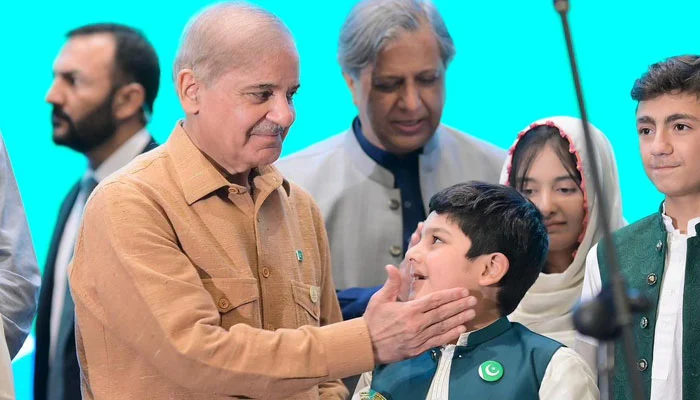
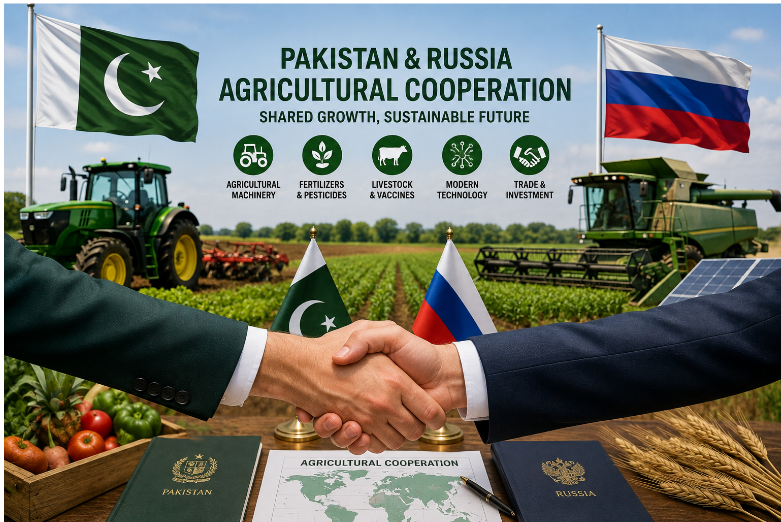
On August 10, Pakistan’s Federal Minister for National Food Security and Research, Rana Tanveer Hussain, met Russian Economic Development Ministry representative Nikita Buzanov in Islamabad to discuss opportunities in agricultural machinery, fertilizers, pesticides, livestock vaccines and related technologies. Russian companies and institutions have expressed interest in exploring these areas with Pakistan.
At first glance, this may sound like another bilateral trade discussion. But agriculture makes the development more significant for Pakistan. The country is trying to improve farm productivity, reduce production costs and strengthen food security while dealing with rising input and technology needs.
The real question is what happens after the meetings. If discussions turn into practical projects, the relationship could bring Pakistan new suppliers, technology and investment. If they remain limited to imports, the impact will be much narrower.
The latest talks cover some of the most basic requirements of modern agriculture.
Pakistan has shown interest in modern farm machinery that can help improve productivity, reduce production costs and accelerate mechanization. The discussions also included fertilizers and pesticides, with Pakistan seeking reliable access to quality agricultural inputs at affordable prices. Livestock and animal health were another part of the conversation, particularly vaccines and technologies for disease prevention.
Russia, meanwhile, indicated that its companies and institutions are interested in expanding cooperation and exploring opportunities to supply these products to Pakistan. The two sides also discussed increasing trade in agricultural products and continuing consultations to identify projects of mutual benefit.
It is important to note that these are areas of cooperation under discussion, not a completed trade package.
Why Agriculture Is a Big Deal for Pakistan
Agriculture sits at the centre of Pakistan’s food system and supports a large part of the country’s rural economy.
Yet improving agricultural output is no longer simply about cultivating more land. Farmers need better machinery, reliable inputs, improved storage, technical knowledge and access to modern production methods.
Pakistan has already been looking at international partnerships for this purpose.
In July, the Ministry of National Food Security and Research held discussions with China’s FAMSUN Group on agricultural modernization, grain storage, technology transfer and investment in Pakistan’s agri-food sector. The ministry has also been working on fertilizer availability and prices.
The latest Russia discussions therefore fit into a wider effort to modernize Pakistan’s agricultural sector.
The Machinery Question
One of the most interesting parts of the proposed cooperation is agricultural machinery.
For many farmers, mechanization can make a significant difference to how quickly and efficiently farming operations are carried out. Modern equipment can reduce dependence on manual labour and improve efficiency during activities such as cultivation and harvesting.
But simply importing tractors or other machinery is not enough.
A farmer also needs access to spare parts, maintenance services and people who know how to operate and repair the equipment. If Pakistan wants the relationship to have a lasting impact, technology transfer and technical training should be part of the equation.
This is where the opportunity becomes bigger than a normal import arrangement.
Instead of simply purchasing equipment from abroad, Pakistan could eventually look at local assembly, technical partnerships and training programmes that build domestic expertise around imported technologies.
Could Russian Agricultural Inputs Help?
Fertilizers and pesticides are another major area under discussion.
Pakistan has been paying close attention to fertilizer availability and affordability. The Ministry of National Food Security and Research recently reviewed measures aimed at ensuring timely fertilizer supplies and stabilizing prices for farmers.
Having another international source for agricultural inputs could give Pakistan greater flexibility in its supply chain.
But it would be premature to assume that Russian supplies would automatically make fertilizers or pesticides cheaper. The final cost would depend on several factors, including transportation, exchange rates, quality standards, import arrangements and market conditions.
The more realistic benefit is diversification.
A broader supplier base can give Pakistan more options when international prices change or supply chains face disruptions.
Livestock Is Part of the Story Too
The discussions are not limited to crops.
Pakistan also wants greater cooperation with Russia in livestock and animal health, particularly in vaccines and modern technologies for disease prevention.
This matters because livestock is an important part of Pakistan’s rural economy.
Animal diseases can reduce productivity and create direct financial losses for farmers. Better vaccination and disease-prevention systems can help protect livestock while supporting the wider food supply.
There is also room for cooperation beyond the physical supply of vaccines. Future collaboration could involve veterinary training, research, disease monitoring and technical knowledge.
That would make the relationship more useful over time than simply importing finished products.
Why Russia Is Looking Interesting for Pakistan
Pakistan’s relationship with Russia has been expanding across several areas.
The Ministry of Foreign Affairs has described the relationship as a long-term, multidimensional partnership covering trade, energy, connectivity, industry and agriculture. Recent official engagement has also focused on expanding economic cooperation between the two countries.
Agriculture adds another practical dimension to that relationship.
For Pakistan, Russia offers another major market and potential source of technology and agricultural inputs. For Russian businesses, Pakistan represents a large South Asian market where demand for agricultural equipment, inputs and technology remains significant.
That creates a basis for commercial cooperation, but turning that potential into actual business will require competitive pricing, reliable logistics and clear agreements.
The Bigger Opportunity: Technology Transfer
This may ultimately be the most important part of the conversation.
Pakistan does not only need more agricultural products. It needs better agricultural capabilities.
If Russian companies enter the Pakistani market through machinery, fertilizers or livestock products, Pakistan could seek partnerships that include technical training, local servicing, research cooperation and eventually manufacturing or assembly.
That approach would create more value locally.
It could also help develop Pakistani technicians, engineers, agribusiness professionals and agricultural entrepreneurs.
For a country trying to improve productivity, the difference between buying technology and learning how to use, maintain and eventually produce it is substantial.
There are several practical issues that Pakistan will need to address.
The first is cost. Modern machinery may be useful, but farmers need equipment that makes economic sense for their farms.
The second is after-sales support. Imported machinery without accessible spare parts and trained technicians can quickly become difficult to maintain.
Regulatory standards will also matter, particularly for fertilizers, pesticides and veterinary vaccines.
Then there is logistics.
Moving agricultural machinery and products between Russia and Pakistan efficiently will require reliable transport and trade arrangements. Pakistan and Russia have already discussed connectivity as part of their broader economic relationship, making transport links an important piece of the larger picture.
These issues do not make the cooperation impossible. They simply determine whether it becomes commercially successful.
This is where Pakistan has an opportunity to think beyond the immediate headlines.
If the relationship develops only around importing machinery, fertilizers and vaccines, Pakistan would gain additional access to products.
That is useful, but limited.
A stronger model would involve joint ventures, technology transfer, training, local assembly and research cooperation.
Pakistan has already been seeking this kind of agricultural modernization through partnerships with international companies. The Ministry of National Food Security and Research’s recent engagement with FAMSUN, for example, included discussions on technology transfer and investment in the agri-food sector.
A similar approach with Russian companies could help create longer-term value.
For now, Pakistan and Russia have agreed to continue consultations and explore mutually beneficial projects.
The immediate task will be turning broad areas of interest into specific proposals: which machinery is needed, which agricultural inputs can be supplied competitively, what livestock-health technologies are suitable, and where private companies can participate.
That process will tell us much more about the importance of the latest announcement.
The August 10 meeting is therefore best viewed as an opening rather than an outcome.
If the two sides follow through with commercially viable projects, the relationship could gradually expand from government discussions into actual investment, trade and technology partnerships.
Pakistan’s latest discussions with Russia show how agricultural cooperation is becoming part of a wider economic relationship between the two countries.
The focus on farm machinery, fertilizers, pesticides, livestock vaccines and agricultural technology directly connects with some of Pakistan’s biggest agricultural needs.
But the success of this relationship will not be measured by the number of products Pakistan imports.
The more important question is whether cooperation can improve productivity, strengthen local skills and introduce technologies that remain useful long after an individual shipment has arrived.
For Pakistan, that means approaching the opportunity with a focus on technology transfer, competitive markets and local capacity.
The latest talks may be only the beginning. If both sides can turn them into practical projects, Pakistan-Russia agricultural cooperation could become a meaningful part of Pakistan’s effort to build a more productive and resilient agricultural sector.